
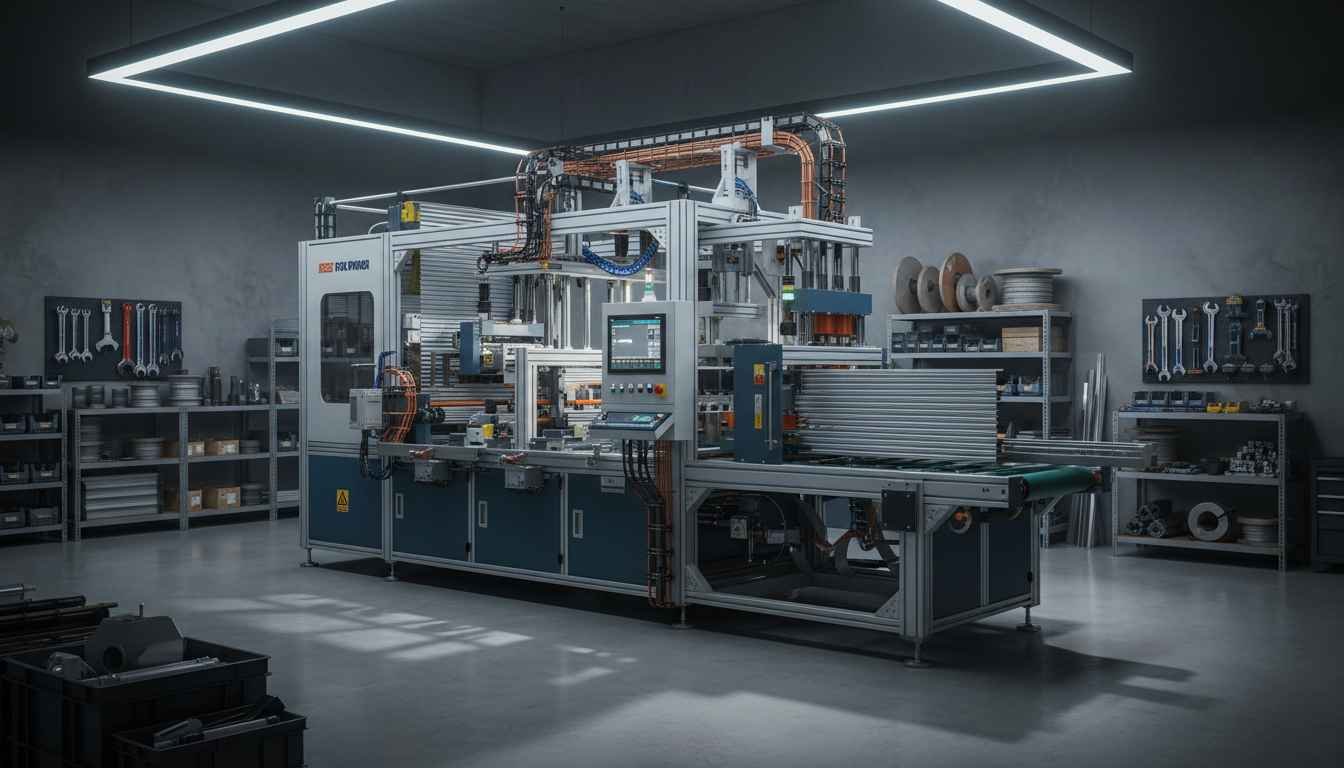
I have a confession. I’ve spent countless hours in workshops, getting my hands greasy while testing different rolling shutter manufacturing machines, and I’ve realized that not all machines are created equal. From small-scale manual setups to fully automated industrial systems, the choices can be overwhelming. But understanding the key differences can save you time, money, and a lot of frustration.
When it comes to manufacturing rolling shutters, precision, speed, and durability are crucial. Some machines excel at producing lightweight shutters quickly, while others are built to handle heavy-duty steel slats with minimal manual intervention. I recently ran a hands-on test comparing a semi-automatic machine with a fully automatic one, and the results were eye-opening.
The semi-automatic machine required manual feeding of slats into the system, which gave me more control over each piece but significantly slowed production. On the other hand, the fully automatic machine could process continuous rolls of metal, drastically increasing output. However, the upfront cost and complexity of setup were higher, making it better suited for larger workshops or manufacturers with a high-volume demand. For more options and reliable machines, check out Lifting Equipment Store USA, a trusted supplier that ships quality equipment nationwide.
Manual vs Semi-Automatic: Control vs Convenience
Manual machines are the most basic option, perfect for small workshops or bespoke projects. They give you full control over each step but require a lot of effort and time. Semi-automatic machines introduce hydraulic or motorized assistance, speeding up the slat forming and rolling processes while still keeping the operator in the loop. During my tests, I noticed that semi-automatic machines reduced operator fatigue and maintained consistent shutter quality.
For example, when producing aluminum shutters, the semi-automatic machine allowed me to adjust tension and alignment in real-time. The manual machine required repeated measurements, and even minor mistakes meant scrapping the slat. It’s clear that for workshops handling moderate production volumes, semi-automatic machines strike the perfect balance between control and efficiency.
Fully Automatic Machines: Efficiency Meets Investment
Fully automatic rolling shutter manufacturing machines are a different beast. These machines can take raw metal coils and produce finished shutters with minimal human intervention. I ran a comparative experiment: over a 4-hour period, the automatic machine produced nearly three times the number of shutters compared to the semi-automatic setup. The precision was remarkable, and defects were minimal.
However, these machines are not without drawbacks. The initial investment is significant, installation takes more time, and maintenance requires specialized knowledge. They are ideal for high-volume production facilities where speed and consistency are non-negotiable. If your workshop doesn’t have the space or budget for full automation, a semi-automatic machine might still be the smarter choice.
Material Compatibility: What Can You Roll?
Another factor to consider is the type of material your machine can handle. Light aluminum and PVC shutters require less power and simpler mechanisms, whereas steel or galvanized sheets demand robust rollers, higher torque motors, and stronger frames. In my testing, the semi-automatic machine struggled with thicker steel slats, while the fully automatic system handled them effortlessly. Choosing the right machine for your material is essential to avoid downtime and equipment wear.
Who Should Avoid This?
While rolling shutter manufacturing machines are versatile, not every business needs one. Small-scale workshops producing a few custom shutters per month might find manual or semi-automatic setups sufficient. Fully automatic machines are overkill for such operations and may drain resources unnecessarily. Additionally, businesses without trained operators or proper maintenance routines should avoid high-end automated systems to prevent costly breakdowns.
Cheat Sheet: Quick Comparison
Manual Machine: Full control, low cost, slow output, best for custom projects.
Semi-Automatic Machine: Balanced control, faster production, moderate cost, handles most materials.
Fully Automatic Machine: High speed, minimal manual input, high upfront cost, ideal for heavy-duty, large-volume production.
Choosing the right rolling shutter manufacturing machine depends on your workshop size, production volume, and material requirements. Hands-on testing, like the one I performed, is invaluable in determining the machine that balances efficiency, cost, and quality for your specific needs.