
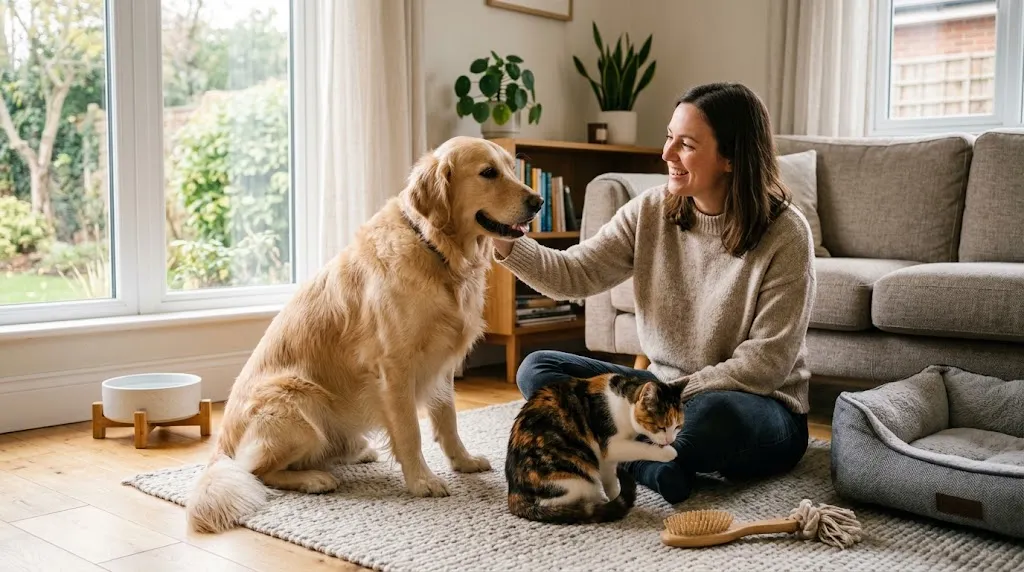
Instead, the guide explores the practical elements that define a positive pet-care experience and explains how prospective owners can approach companionship responsibly.
What Makes Pet Companionship Meaningful?
Living with a pet can add companionship, routine, and interaction to everyday life. Dogs, cats, birds, rabbits, and other companion animals each have different behavioral and environmental needs, so the right pet depends on the owner’s lifestyle as well as the animal’s requirements.
A successful relationship starts with realistic expectations. Pets require time, attention, appropriate food, safe housing, preventive healthcare, exercise or enrichment, and financial planning for routine and unexpected expenses.
For anyone considering adoption, our related guide to a potential rescue pet provides additional context around the idea of welcoming a companion animal into a household.
Choosing the Right Pet for Your Lifestyle
There is no single pet that is right for every household. Before choosing an animal, consider how much time you can realistically dedicate to daily care and interaction.
Important considerations include:
- Available living space
- Daily schedule and time at home
- Exercise requirements
- Grooming needs
- Noise and activity levels
- Expected lifespan
- Veterinary expenses
- Food and equipment costs
- Travel and holiday arrangements
- Compatibility with children or other animals
A pet should be selected according to its actual needs rather than appearance alone. A particular breed or species may have requirements that do not fit every home.
Preparing Your Home for a New Pet
Preparation can make the transition easier for both the animal and its owner. Before bringing a pet home, identify a safe area where the animal can eat, sleep, rest, and gradually become familiar with its surroundings.
Depending on the species, basic supplies may include food and water bowls, suitable food, bedding, identification equipment, toys, grooming tools, cleaning supplies, and appropriate containment or transportation equipment.
Potential hazards should also be considered. Household chemicals, unsafe foods, exposed electrical cables, small objects, and certain plants can pose risks to animals.
Nutrition Is a Foundation of Pet Care
Good nutrition is one of the most consistent responsibilities of pet ownership. Dietary requirements vary according to species, age, size, activity level, health status, and other individual factors.
Owners should select food appropriate for their animal rather than assuming that a diet suitable for one pet will automatically be suitable for another.
Fresh water should also be available as appropriate for the animal. Changes in appetite, drinking behavior, weight, or digestion can sometimes indicate that a veterinary discussion is warranted.
For a broader perspective on professional animal care, you can also read our guide to Family Pet Clinic Patchogue, which covers veterinary examinations, preventive care, diagnostics, dentistry, surgery, and other pet-health services.
Preventive Veterinary Care
Responsible pet ownership includes planning for routine veterinary care rather than waiting until an animal becomes seriously ill.
Depending on the pet, preventive care may include:
- Routine physical examinations
- Vaccinations
- Parasite prevention
- Dental evaluations
- Weight monitoring
- Nutrition discussions
- Age-related health assessments
- Diagnostic testing when clinically appropriate
The correct healthcare schedule depends on the individual animal. A veterinarian can help establish an appropriate preventive-care plan.
Understanding Grooming and Hygiene
Grooming is more than an aesthetic concern. Appropriate grooming can help owners monitor their pet’s skin, coat, ears, nails, and general condition.
The frequency and type of grooming depend heavily on the animal. Some pets need regular brushing, while others require professional grooming for coat maintenance.
Owners should also learn the difference between ordinary grooming and signs that require veterinary attention. Persistent skin irritation, unusual odors, sores, excessive scratching, or changes around the ears can warrant professional evaluation.
Exercise and Enrichment
Physical activity and mental stimulation are important parts of a healthy routine for many companion animals.
Dogs may benefit from regular walks, play sessions, training, and opportunities to explore safely. Cats can benefit from interactive play, climbing opportunities, scratching surfaces, and environments that encourage natural behaviors.
Other companion animals also need species-appropriate enrichment. The objective is not simply to keep a pet occupied but to provide activities suited to its natural behaviors and physical abilities.
The Emotional Side of Pet Ownership
Companionship works both ways. Owners often develop strong emotional relationships with their animals, while pets can become closely integrated into household routines.
However, owners should remember that animals communicate differently from people. Changes in behavior may reflect fear, discomfort, environmental stress, illness, boredom, or other factors.
Learning to observe normal behavior can therefore help owners notice meaningful changes earlier.
Pet Safety and Identification
Preventing a pet from becoming lost is another important part of responsible ownership. Appropriate identification can make it easier to reunite an animal with its family if it escapes.
Depending on the animal and local requirements, owners may consider identification tags, microchipping, secure collars or harnesses, and other appropriate measures.
Home safety matters too. Gates, doors, windows, balconies, outdoor fencing, and transportation arrangements should be reviewed according to the animal’s behavior and physical abilities.
Traveling With Pets
Pet owners should think about travel before committing to an animal. Some pets can travel relatively easily, while others become stressed by changes in environment.
When travel is necessary, planning may include transportation arrangements, food, medications, identification, veterinary records, accommodation requirements, and emergency contacts.
If the pet remains at home, owners should arrange appropriate care rather than leaving an animal unattended for an unsuitable period.
Travel planning can also be connected with our broader collection of Northeast USA destinations, family travel ideas, and international destinations for families.
Finding Reliable Pet Care When You Are Away
Owners who travel regularly should establish a dependable pet-care plan. Depending on the animal, options can include a trusted family member, professional pet sitter, boarding facility, or another suitable care arrangement.
Before leaving a pet with another caregiver, provide clear instructions covering feeding, medication, exercise, behavioral concerns, emergency contacts, and veterinary information.
It can also help to maintain a written care plan for animals with special dietary or medical requirements.
Adoption and Responsible Pet Ownership
Adoption can be a meaningful way to provide a home to an animal that needs one, but it should still be approached carefully.
Prospective adopters should consider whether their household can support the animal throughout its expected lifespan. The initial adoption decision is only the beginning of a long-term commitment.
Our article about a potential rescue pet connects with this topic and provides an additional entry point for readers researching rescue animals.
Building a Long-Term Pet Care Routine
A dependable routine makes pet ownership easier to manage. Rather than treating individual tasks as isolated responsibilities, owners can organize them into a simple schedule.
Daily
- Provide appropriate food and fresh water.
- Observe normal behavior and activity.
- Provide exercise or enrichment suited to the pet.
- Maintain appropriate hygiene.
Regularly
- Clean bedding and living areas.
- Check grooming needs.
- Monitor weight and body condition.
- Review food and household supplies.
As Recommended by a Veterinarian
- Schedule wellness examinations.
- Maintain appropriate vaccinations.
- Follow parasite-prevention recommendations.
- Complete recommended dental or diagnostic care.
Recognizing When Professional Help May Be Needed
Pet owners should contact a veterinary professional when an animal develops concerning symptoms or a significant change from its normal behavior.
Examples can include persistent loss of appetite, difficulty breathing, repeated vomiting or diarrhea, severe lethargy, unusual pain, injury, seizures, or other potentially serious changes.
Emergency situations require prompt professional veterinary assessment. Online information should not be used as a substitute for an examination when an animal may be seriously ill or injured.
Pet Care Is a Long-Term Commitment
The most rewarding pet experiences usually come from understanding that companionship and responsibility are connected. An animal may provide affection and companionship, but the owner is responsible for creating an environment where the pet can remain safe and healthy.
This means budgeting for food and healthcare, maintaining a safe living environment, providing appropriate enrichment, arranging care during travel, and responding to health concerns when they arise.
For households considering professional veterinary support, our Patchogue veterinary-care guide provides a useful example of the types of services a full-service veterinary practice may offer.
Pet Ownership and the Wider Family
When several people share responsibility for a pet, clear expectations can prevent important tasks from being overlooked.
Families can decide who is responsible for feeding, exercise, grooming, cleaning, appointment scheduling, medication, and travel arrangements.
Children can participate in age-appropriate activities, but adults should remain responsible for the animal’s essential care and safety.
What to Look for in a Pet Care Provider
When evaluating a pet-care provider, focus on services that actually match your animal’s needs.
Useful questions include:
- What species and types of animals does the provider support?
- What services are available?
- Are veterinary professionals involved when medical concerns arise?
- How are emergencies handled?
- What information does the provider require from owners?
- How are medications and special dietary requirements managed?
- What communication options are available?
These questions can help owners distinguish between general pet services and providers equipped for more specialized needs.
Uaro Pets and the Idea of Better Pet Experiences
The central idea behind a quality pet experience is not simply convenience. It is the combination of companionship, safety, health, enrichment, and responsible ownership.
Whether someone is considering a new pet, caring for an established companion, or looking for professional support, these principles remain relevant.
A pet-centered approach should recognize the animal as a long-term responsibility rather than a short-term purchase. That perspective can help owners make better-informed decisions about food, healthcare, housing, exercise, grooming, travel, and adoption.
Final Thoughts
Uaro Pets can be considered within the broader conversation about meaningful pet companionship and responsible animal care. A rewarding relationship with a pet depends on much more than choosing an appealing animal. It requires preparation, consistent care, preventive healthcare, appropriate nutrition, enrichment, safety planning, and a willingness to adapt as the animal ages.
For readers exploring the wider pet-care topic, OmniFlowHub’s existing articles on veterinary care, rescue pets, and pet end-of-life services provide additional perspectives across different stages of pet ownership.
Ultimately, the best pet-care experience is one that supports the animal throughout its entire life while helping owners build a safe, informed, and sustainable relationship with their companion.