
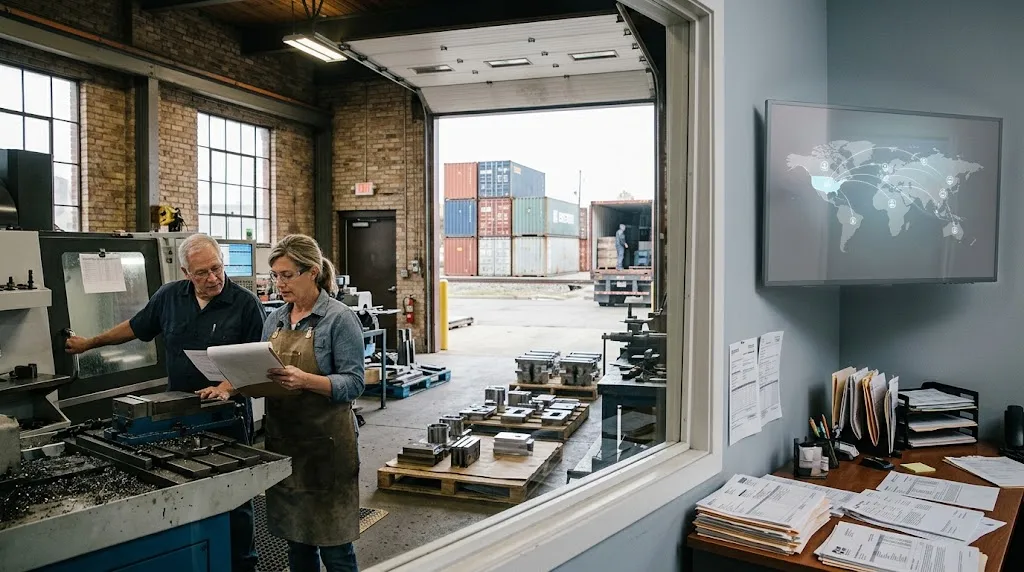
Trade policy can sound like something that only matters to governments, multinational corporations, and large manufacturers. In reality, changes to tariffs, customs rules, market access, and international supply chains can reach small businesses surprisingly quickly.
Recent U.S. trade agreements and trade arrangements have created a more complicated environment for small and local businesses. Some businesses may gain easier access to overseas customers or benefit from new investment and export opportunities. Others may face higher costs when importing products, components, packaging, equipment, or raw materials.
For small businesses, the important question is not simply whether a trade deal is described as positive or negative. The more useful question is: how does it change the costs, opportunities, and risks facing my business?
What Is Actually Changing?
Recent U.S. trade policy has involved a combination of formal agreements, economic arrangements, tariff changes, and negotiations with individual trading partners. The United States Trade Representative maintains a running list of presidential tariff actions and trade agreements involving countries including the United Kingdom, Indonesia, China, Japan, and others.
That means there is not necessarily one single rule that applies to every small business. The effect depends heavily on what a company sells, where it sources products, where its customers are located, and which countries are involved in its supply chain.
Trade agreements can address much more than import taxes. They may cover customs procedures, digital commerce, regulatory barriers, investment, intellectual property, government procurement, and rules determining where products originate.
1. Small Businesses May Get Better Access to International Customers
One of the biggest potential opportunities created by trade agreements is improved access to foreign markets.
A small U.S. manufacturer that previously found international sales too expensive or complicated may be able to explore new markets when tariffs or other trade barriers are reduced. The same can apply to agricultural producers, professional service providers, technology companies, and online sellers.
The United States Trade Representative notes that small businesses account for 98% of identified U.S. exporters and support millions of jobs through direct and indirect exports. This makes international market access relevant even to companies that have never considered themselves global businesses.
For a local company, expanding internationally does not necessarily mean opening offices overseas. A business might begin by selling through an e-commerce store, working with an international distributor, licensing its intellectual property, or providing digital services to customers in another country.
Businesses interested in this opportunity should also pay attention to digital payment solutions, international shipping, taxes, and customer-service requirements before entering a new market.
2. Import Costs Can Still Be a Major Concern
Trade agreements can create opportunities while tariffs continue to create challenges for other products or countries.
This matters because many small businesses depend on imported inventory or components. A retailer may import finished products, while a manufacturer may rely on foreign materials or parts. Even a service business can be indirectly affected if the equipment or technology it uses becomes more expensive.
The U.S. Chamber of Commerce has reported that small businesses have faced higher costs as tariffs and trade uncertainty have affected imported goods. Its small-business research also found that many companies have responded to higher input costs by raising their own prices.
For businesses with limited cash reserves, even a relatively small increase in landed costs can affect profit margins.
3. Local Retailers May Need to Recalculate Pricing
Pricing decisions become more complicated when import costs change.
Suppose a small retailer purchases inventory internationally for $50 per unit. The final cost is not simply the supplier’s price. Shipping, insurance, customs duties, brokerage, warehousing, payment processing, and other expenses can all contribute to the landed cost.
If one part of that calculation changes, the retailer has several choices: absorb the additional expense, increase prices, find a different supplier, reduce product margins, or change the product mix.
This is why business owners should calculate their fully landed cost rather than looking only at the supplier’s quoted price.
4. Supply Chains Could Become More Important
Trade policy is also encouraging many businesses to look more closely at supply-chain resilience.
A company that relies almost entirely on one overseas supplier may have fewer options when tariffs, shipping disruptions, geopolitical developments, or customs changes occur. A diversified supplier network can provide more flexibility, although maintaining multiple suppliers can also increase administrative complexity.
Small businesses should therefore review their most important suppliers and identify where they have concentration risk.
Useful questions include:
- Which products depend on overseas suppliers?
- Which countries are involved in the supply chain?
- Can an alternative supplier be found domestically or in another market?
- How quickly can inventory be replaced?
- Which products have the highest tariff or shipping exposure?
This type of review can also help businesses prepare for broader transportation and logistics costs.
5. Digital Businesses May See New Opportunities
Modern trade agreements increasingly address digital commerce rather than focusing exclusively on physical goods.
Digital trade rules can affect areas such as cross-border data flows, electronic transactions, online services, and digital market access. For small software companies, consultants, agencies, freelancers, and online retailers, these issues can be just as important as traditional customs duties.
A U.S. business that sells digital services internationally may not ship a physical product at all, but it can still encounter different tax, privacy, payment, and regulatory requirements in each market.
That makes international expansion a combination of marketing and compliance rather than simply putting a product on a website.
Businesses working in this area can also benefit from stronger digital marketing strategies for global markets.
6. Larger Companies May Have an Advantage in Compliance
One challenge for smaller businesses is the administrative burden associated with international trade.
A large corporation may have customs specialists, lawyers, accountants, procurement teams, and international logistics departments. A local business may have only a few employees handling all of those responsibilities.
Rules of origin, product classifications, customs documentation, export controls, labeling requirements, and foreign-market regulations can become difficult to manage without specialist support.
For that reason, a small business considering international expansion should not assume that a lower tariff automatically means an easy export opportunity.
7. Trade Deals Can Create Competitive Pressure
Lower trade barriers can benefit domestic companies that export, but they can also increase competition inside the U.S. market.
If foreign businesses gain easier access to American consumers, local producers may face new competitors. This can be particularly important in industries where price is the primary purchasing factor.
Small companies can respond by focusing on areas that are harder to replicate at scale, such as customer service, specialization, local relationships, customization, product quality, convenience, and brand identity.
Local businesses should also understand how competitors are using digital marketing to reach customers, because international competition increasingly happens online.
8. Exporting Does Not Have to Start at a Massive Scale
One misconception about trade is that international selling is only suitable for large corporations.
A small business can test international demand gradually. For example, an online retailer might begin by accepting orders from one additional country rather than attempting to serve an entire continent.
A professional services company might target one international customer segment. A manufacturer could work with a distributor instead of building its own foreign sales operation.
Starting small allows a company to learn about shipping, taxes, customer expectations, currency conversion, returns, and regulatory requirements before making a larger investment.
9. Small Businesses Should Watch Rules of Origin
Rules of origin can become particularly important when a company wants to benefit from preferential trade treatment.
In simple terms, these rules determine whether a product qualifies as originating from a particular country or region. A product assembled in one country using components from several other countries may not automatically qualify for the preferred tariff treatment associated with an agreement.
The exact requirements vary by agreement and product. Businesses should therefore avoid assuming that simply purchasing from or shipping through a participating country automatically qualifies a product for preferential treatment.
When the financial impact is significant, businesses should work with a qualified customs broker or trade professional.
10. Local Businesses Should Treat Trade Policy as a Planning Issue
The biggest lesson for small and local businesses is that trade policy should not be treated as a distant government issue.
A change in tariffs can affect product costs. A new market-access provision can create an export opportunity. A customs change can affect delivery times. A new digital-trade rule can influence how an online company serves international customers.
Business owners do not need to become international trade experts, but they should understand which parts of their business are exposed to international trade.
A useful starting point is to create a simple trade-risk checklist covering suppliers, countries, products, shipping costs, tariffs, currency exposure, customs requirements, and alternative sourcing options.
How Small Businesses Can Prepare
Businesses can take several practical steps to prepare for changing trade conditions:
- Review supplier locations: Identify where your key products and components originate.
- Calculate landed costs: Include shipping, duties, brokerage, insurance, and related expenses.
- Identify alternative suppliers: Build contingency options before a disruption occurs.
- Review pricing: Understand how cost changes affect your margins.
- Research export markets: Look for countries where your products or services may have demand.
- Check compliance requirements: Verify customs, labeling, licensing, and product-specific rules.
- Improve digital sales: Make your website and payment systems ready for customers outside your local market.
- Track policy changes: Trade rules can change, so businesses should use authoritative government and customs resources.
Businesses focused on growth can also evaluate data-driven approaches to revenue growth and digital marketing strategies alongside their trade planning.
What This Means for Main Street Businesses
For a neighborhood retailer, manufacturer, restaurant supplier, technology company, or professional service provider, the effects of a trade deal may not appear immediately.
They can show up indirectly through supplier prices, customer spending, shipping costs, product availability, competition, or access to new customers.
That is why small businesses should look beyond headlines about whether a particular agreement is a “good” or “bad” deal. The practical impact depends on the company’s individual exposure.
An importer may care most about tariffs and customs rules. An exporter may focus on market access. A technology company may care about digital trade provisions. A local manufacturer may be more concerned about foreign competition and domestic supply chains.
Conclusion
New U.S. trade deals and tariff policies are creating both opportunities and challenges for small and local businesses. Some companies may benefit from improved access to foreign markets, new investment, or reduced barriers. Others may face higher input costs, greater competition, or additional compliance requirements.
The most practical response for a small business is preparation. Understanding suppliers, calculating landed costs, monitoring trade rules, diversifying important relationships, and identifying potential export opportunities can make a company more adaptable.
Trade policy may be negotiated at the national level, but its effects can eventually reach the local storefront, small factory, online shop, and independent service provider. Businesses that understand where those effects connect to their own operations will be better positioned to respond as the rules continue to evolve.