
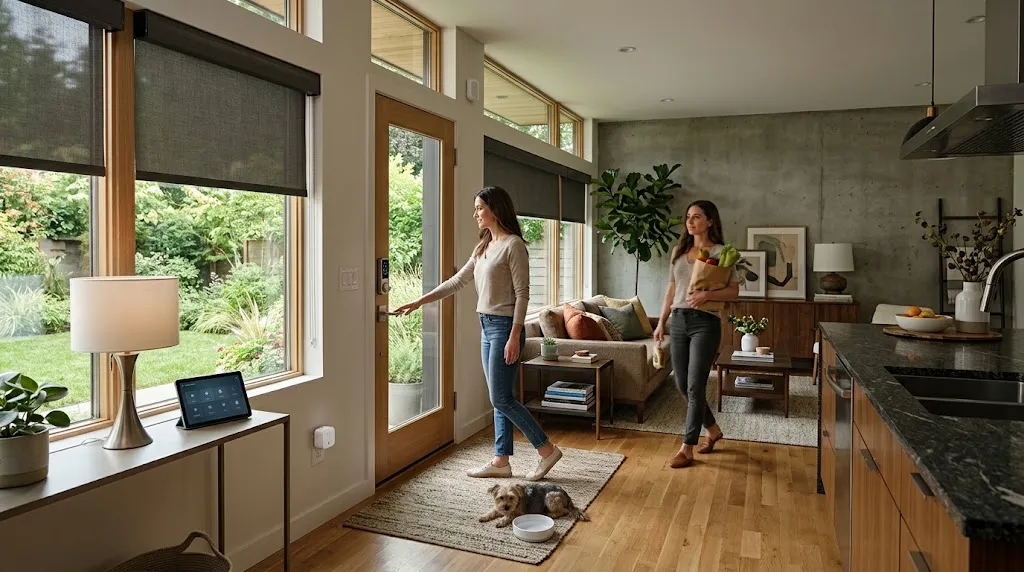
Smart home technology is no longer limited to smart speakers and voice-controlled light bulbs. Today’s connected-home ecosystem includes devices that can monitor energy consumption, detect problems before they become expensive, improve home security, automate daily routines, and make ordinary household systems more convenient.
What makes modern smart home technology particularly interesting is the growing focus on interoperability. Standards such as Matter are designed to help compatible devices from different manufacturers work together across supported smart-home platforms. That gives homeowners more flexibility when choosing products for their homes.
However, a smart home does not need to contain dozens of expensive gadgets. The most useful devices are often the ones that solve a specific everyday problem.
Here are five innovative smart home devices and device categories worth considering if you want to make your home more connected without filling it with unnecessary technology.
1. Smart Energy Monitoring Plugs
A smart plug is one of the easiest ways to add automation to an existing home appliance. But energy-monitoring smart plugs can provide more than simple remote on-and-off control.
These devices can monitor the electricity consumption of compatible appliances and help homeowners understand where energy is being used. Instead of guessing which devices are consuming the most power, homeowners can use actual consumption information to make better decisions.
For example, an energy-monitoring plug could be used with a home-office setup, entertainment equipment, a lamp, or another suitable appliance. Some models can also create schedules that automatically turn connected devices on or off.
Energy monitoring is becoming increasingly relevant to the wider smart-home ecosystem. Matter’s energy-management capabilities allow compatible devices to report electrical and energy information to supported systems, creating opportunities for smarter energy monitoring and automation.
This makes smart plugs useful for homeowners who want to start building a connected home without replacing their existing appliances.
2. Smart Water-Leak and Environmental Sensors
A small water leak can become a major household problem if it goes unnoticed. A damaged pipe, leaking washing-machine connection, or slow plumbing leak may continue for hours before anyone discovers it.
Smart water-leak sensors are designed to provide an early warning when they detect water in vulnerable locations. Depending on the device, homeowners may receive an alert through a smartphone app or trigger another connected automation.
These sensors can be placed in areas such as:
- Under kitchen sinks
- Under bathroom sinks
- Near washing machines
- Close to water heaters
- In basements and utility rooms
- Near other vulnerable plumbing connections
Some environmental sensors can also monitor conditions such as temperature, humidity, or air quality. This can make them useful beyond simple leak detection.
For homeowners interested in building a broader connected environment, environmental sensors can become an important part of automated routines that respond to changing conditions inside the home.
3. Smart Locks and Connected Door Access
Smart locks are another example of technology that can solve a very ordinary household problem: managing access to your home.
Depending on the model, a smart lock may support methods such as a smartphone, keypad, fingerprint, digital credential, or traditional physical key. Some systems can also automatically lock the door after a defined period.
This can be particularly useful for households where multiple people need access. Instead of distributing spare keys, homeowners can use different access methods supported by their chosen system.
Smart locks can also become part of broader home-automation routines. For example, a homeowner may connect door access with lighting or other compatible devices.
Compatibility is important when choosing a connected lock. Matter currently supports door locks as one of its smart-home device categories, but the exact features available can vary between manufacturers and platforms.
Homeowners should therefore check whether a particular lock works with their existing smart-home ecosystem before purchasing it.
4. Smart Window Shades and Automated Blinds
Smart window coverings are often overlooked when people think about home automation, yet they can make everyday routines considerably easier.
Motorized shades and blinds can be scheduled to open or close at particular times. Depending on the system, they may also be incorporated into broader automation routines.
For example, window shades could open in the morning and close later in the day when direct sunlight becomes stronger. This reduces the need to repeatedly adjust blinds manually.
Automated window coverings can also complement other smart-home technologies. When combined with lighting, environmental sensors, and other compatible devices, they can become part of a coordinated home environment.
Matter’s supported device categories include window coverings and shades, which can help compatible products participate in broader multi-platform smart-home setups.
Homeowners interested in traditional home improvements can also explore related rolling shutter and window solutions when considering privacy, security, and light control.
5. Smart Presence Sensors
Traditional motion sensors detect movement, but newer presence-sensing technology can provide more useful information about whether someone is actually occupying a room.
Presence sensors can be used to trigger smart-home routines based on occupancy. For example, a system could automatically activate lighting when a room becomes occupied and adjust connected devices when the room is empty.
This can make automation feel more natural because the home responds to what is happening rather than relying entirely on fixed schedules.
Presence detection can have applications in:
- Automatic lighting
- Energy-saving routines
- Room occupancy monitoring
- Security automation
- Heating and cooling routines
- Smart appliance management
As connected-home standards develop, presence and environmental sensing are becoming increasingly interesting areas for smart-home automation.
Why Matter Is Important for Smart Home Devices
One of the biggest challenges in smart-home technology has traditionally been compatibility. A device from one manufacturer may work well with one ecosystem but provide limited functionality with another.
Matter is designed to reduce some of this fragmentation by providing a common smart-home protocol that compatible products can use across supported ecosystems.
Matter works with networking technologies such as Wi-Fi, Thread, and Ethernet, while Bluetooth Low Energy can be used during device setup. Compatible devices can also support multi-platform control through Matter’s multi-admin capabilities.
That means homeowners can have more flexibility when choosing devices instead of automatically being locked into one manufacturer’s ecosystem.
However, consumers should still check the exact compatibility information for every product. Matter certification does not mean every feature works identically across every smart-home platform.
How Smart Home Technology Is Becoming More Useful
The smart-home industry is moving away from the idea that every device needs to be a standalone gadget.
The more useful direction is coordinated automation. A sensor can provide information to a controller, which can then trigger another compatible device.
For example, a presence sensor could detect that someone has entered a room, a lighting system could respond automatically, and a connected thermostat could adjust the environment based on the home’s automation settings.
This approach turns individual products into a connected system.
The same broader technology trend can be seen in AI-powered personal assistants, where different digital services are increasingly being connected to automate routine tasks.
Smart Home Security Should Be Part of the Decision
Convenience should not be the only consideration when purchasing connected devices.
Smart-home products may collect information about device usage, household routines, environmental conditions, or access events. Homeowners should therefore review the manufacturer’s privacy policies, account-security options, firmware-update practices, and cloud requirements.
Strong passwords and multi-factor authentication should be used whenever available, particularly for accounts controlling security-related devices.
It is also useful to understand whether a device can operate locally or depends on cloud services. Some Matter-based setups can process commands locally through a compatible controller, although remote access and specific features can still depend on the platform and product.
How to Choose the Right Smart Home Devices
Buying smart devices simply because they have impressive specifications can quickly become expensive. A better strategy is to identify the problem you want to solve first.
If energy consumption is the concern, an energy-monitoring plug may be more useful than another voice-controlled gadget. If water damage is a concern, a leak sensor could provide more practical value. If access management is difficult, a smart lock may be the logical starting point.
Before purchasing a device, consider:
- Compatibility with your existing smart-home platform
- Whether Matter is supported
- Whether Wi-Fi, Thread, or another connection is required
- Whether a separate hub or controller is necessary
- Whether a subscription is required for important features
- How the manufacturer handles software updates
- What personal or household information the device collects
- Whether the device can operate locally or requires cloud connectivity
Consumers who are already interested in connected technology can also explore artificial intelligence and emerging technology as smart-home systems increasingly incorporate automation and intelligent services.
Smart Home Technology Does Not Have to Be Expensive
A common misconception is that creating a smart home requires replacing every appliance.
That is not necessarily the case.
Smart plugs, sensors, switches, and other relatively small devices can add connected functionality to parts of an existing home. This allows homeowners to expand gradually rather than spending a large amount of money on a complete smart-home installation.
For example, a homeowner could start with energy monitoring in a home office, add a leak sensor near the washing machine, and later install smart window coverings or a connected lock.
This gradual approach also makes it easier to identify which types of automation actually provide value.
The Future of Connected Homes
Smart-home technology is continuing to move toward interoperability, automation, energy awareness, and more context-aware control.
Matter 1.6, released in 2026, introduced improvements including better device capability communication, security-sensor event history, more flexible commissioning, and thermostat suggestions designed to take user preferences and current context into account.
These developments suggest that the future smart home will be less about controlling individual gadgets and more about coordinating systems around the needs of the household.
That could eventually mean homes that automatically respond to occupancy, energy conditions, environmental changes, security events, and user preferences without requiring constant manual interaction.
Final Thoughts
The best smart-home device is not necessarily the newest or most expensive product. It is the one that solves a genuine problem and works reliably with the rest of your home.
Energy-monitoring plugs, water-leak sensors, smart locks, automated window coverings, and presence sensors are five practical categories worth considering when expanding a connected home.
As standards such as Matter continue to improve interoperability, homeowners have more opportunities to build flexible smart-home systems rather than relying entirely on one manufacturer.
The smartest approach is to start small, choose compatible devices, pay attention to privacy and security, and expand the system only when a new device provides a clear practical benefit.