
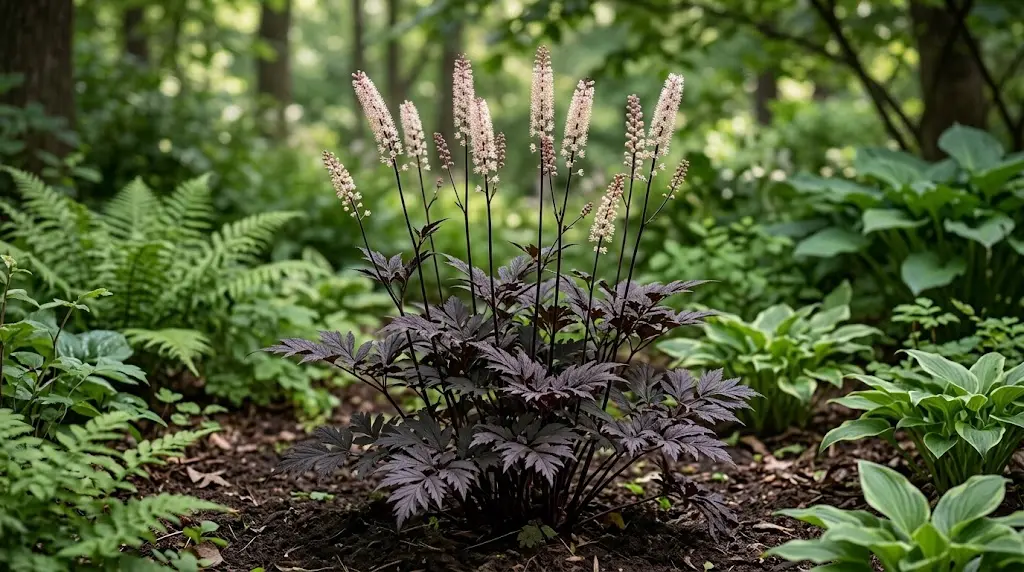
Botanically known as Actaea simplex ‘Hillside Black Beauty’, this cultivar is especially useful in shaded borders, woodland-inspired gardens, and sheltered planting areas where its dark leaves can stand out against lighter greenery. Its pale flowers create an elegant contrast with the deep tones of its foliage.
This guide explains the plant’s main characteristics, growing requirements, garden design uses, seasonal care, and common problems. It also covers practical considerations that help gardeners decide whether this distinctive perennial is appropriate for their climate, soil, and available planting space.
What Makes Bugbane ‘Hillside Black Beauty’ Special?
‘Hillside Black Beauty’ belongs to the bugbane group of herbaceous perennials. It is grown primarily for its dark, finely divided foliage and its tall flower stems, which carry narrow clusters of small, pale flowers in late summer or autumn, depending on local growing conditions.
The foliage can appear deep burgundy, reddish-purple, or almost black-purple. Its finely cut leaves create a soft, layered texture that contrasts with broad-leaved plants and simpler garden shapes. The flower spikes rise above the foliage and introduce a lighter vertical element.
Unlike a short-lived bedding display, this is a perennial plant that can return from its established root system when growing conditions are suitable. However, it can take time to develop into a mature clump, so gardeners should allow space for gradual growth.
Distinctive Dark Foliage
The plant’s most recognizable feature is its deeply colored foliage. Dark leaves can create visual depth in a border, especially when placed beside silver-green, golden, or fresh green plants.
Its color also provides a useful background for lighter flowers. White, cream, and pale pink blooms can appear more noticeable when they grow beside dark foliage, making the overall planting arrangement feel balanced rather than overly busy.
Tall, Fragrant Flower Spikes
In late summer and autumn, the plant produces slender flower spikes above its leafy mound. The small flowers are generally pale pink, creamy white, or lightly tinted, depending on the plant and growing conditions. Their fragrance can add another dimension to a shaded garden.
The upright flower stems create height without the heavy appearance of large flowering shrubs. Their delicate structure works particularly well in naturalistic borders and woodland-style planting schemes.
Ideal Growing Conditions
Choosing the right growing location is one of the most important steps in establishing ‘Hillside Black Beauty’. The plant generally prefers partial shade, fertile soil rich in organic matter, and consistent moisture. In cooler climates, it may tolerate more sunlight, but strong afternoon sun and dry soil can damage the foliage.
Sunlight and Shade
Partial shade is usually a reliable starting point. A location receiving gentle morning sunlight and protection from intense afternoon rays can help preserve foliage quality while supporting flowering.
Full shade may also be suitable, although flower stems can lean toward brighter areas. In exposed or windy locations, tall stems may require additional support, particularly when the plant is growing in deep shade.
Observe the site throughout the day before planting. Sunlight duration, reflected heat from walls, nearby tree roots, and local summer temperatures can all affect the plant’s performance.
Soil Requirements
‘Hillside Black Beauty’ performs best in soil that retains moisture while providing suitable drainage. A loamy soil enriched with compost or other well-decomposed organic matter can support healthy root development and maintain more consistent moisture levels.
Very dry, compacted, or nutrient-poor soil can make establishment more difficult. Heavy soil should not be allowed to remain excessively waterlogged around the crown, even though the plant appreciates moist conditions.
Before planting, loosen the soil and incorporate organic matter where appropriate. Avoid making abrupt changes to soil conditions without understanding the existing drainage and structure.
Watering and Moisture
Consistent soil moisture is important, especially during the first growing seasons and periods of warm weather. Water thoroughly when the root zone begins to dry rather than relying on frequent, shallow watering.
A layer of organic mulch can help reduce evaporation and moderate soil temperature. Keep mulch away from direct contact with the crown to reduce the risk of persistent dampness around the plant’s base.
During dry periods, check the soil rather than following a rigid watering schedule. Plants growing beneath trees may need additional attention because nearby roots can compete for available moisture.
How to Plant Bugbane ‘Hillside Black Beauty’
Careful planting gives this perennial a better chance of establishing strong roots and producing its characteristic foliage and flower spikes.
Step 1: Select a Suitable Location
Choose a sheltered area with partial shade, fertile soil, and enough room for the mature plant. Avoid placing it where intense afternoon sunlight regularly dries the soil or where strong winds may damage its tall flower stems.
Step 2: Prepare the Soil
Remove weeds and loosen the planting area. Incorporate suitable organic matter if the soil needs improvement, while maintaining drainage appropriate for the site.
Step 3: Position the Plant
Dig a hole wide enough to accommodate the root ball without forcing or bending the roots. Position the plant at approximately the same depth at which it was growing in its container, then refill the hole and gently firm the soil.
Step 4: Water Thoroughly
Water after planting to settle the soil around the roots. Continue monitoring moisture as the plant establishes, particularly during warm weather or when rainfall is limited.
Step 5: Apply Mulch and Monitor Growth
Apply a moderate layer of organic mulch to help maintain soil moisture. Check the plant periodically for wilting, leaf scorch, weeds, and signs of excessive wetness around the crown.
Garden Design Ideas for Dark Elegance
The unusual foliage color makes ‘Hillside Black Beauty’ useful in planting designs that depend on contrast. Rather than treating it as an isolated novelty, consider how its height, texture, and seasonal flowers can complement the surrounding plants.
Create Contrast with Light-Colored Flowers
White and cream flowers can stand out against the plant’s dark leaves. Pale pink blooms can create a softer combination, while light-colored foliage can help prevent a shaded border from feeling visually heavy.
Choose companion plants with compatible light and moisture requirements. A visually attractive combination will not remain successful if one plant needs dry soil while another requires consistent moisture.
Build a Layered Shade Border
Use ‘Hillside Black Beauty’ as a taller focal plant within a layered planting arrangement. Lower-growing perennials can occupy the foreground, while shrubs or taller shade-tolerant plants provide structure behind it.
Leave sufficient room around the mature clump so that its foliage and flower stems remain visible. Overcrowding can reduce airflow, make maintenance more difficult, and obscure the plant’s distinctive form.
Use Repetition for a Cohesive Design
Planting several specimens in a loose group can create a stronger visual effect than scattering individual plants throughout a large garden. Repetition helps connect separate parts of a border and makes the dark foliage feel intentional within the design.
Allow adequate spacing for mature growth. The appropriate distance depends on the expected size of the plants, the desired density, and the surrounding vegetation.
Combine Foliage Textures
The finely divided leaves of bugbane contrast effectively with broad, rounded leaves and arching ornamental grasses suited to shade. Combining different leaf shapes can maintain interest even when the plant is not flowering.
For additional inspiration on garden and home aesthetics, explore decorative accents and visual interest in home styling and using gray tones in design schemes. These articles offer broader ideas about contrast and color, although they do not describe companion plants for bugbane.
Seasonal Care and Maintenance
Once established in a suitable location, ‘Hillside Black Beauty’ generally requires routine rather than intensive maintenance. Consistent moisture, appropriate site conditions, and occasional cleanup help preserve its appearance.
Spring Care
As new growth emerges, remove remaining dead foliage and inspect the planting area for weeds. Add compost or other suitable organic material when needed, taking care not to bury the plant’s crown.
Spring is also an appropriate time to assess whether neighboring plants have become too crowded. Make adjustments only when necessary, since mature clumps can take time to establish and recover from disturbance.
Summer Care
Monitor soil moisture during warm and dry periods. The foliage can lose quality or develop scorched margins when the root zone remains too dry, particularly in exposed sites.
Check tall stems for leaning if the plant is exposed to wind or heavy rain. A discreet support may help if flower spikes become unstable, although a sheltered planting location is preferable.
Autumn Care
Late-season flowers provide much of the plant’s ornamental appeal. Enjoy the flower spikes while they remain attractive, then remove spent stems when they begin to deteriorate or after flowering and fruiting are complete.
Gardeners may leave some healthy foliage until the end of its natural seasonal cycle if it continues to contribute to the garden’s appearance. Remove damaged material when appropriate and dispose of plant debris responsibly.
Winter Care
The foliage is deciduous, so the plant typically dies back above ground during its dormant period. Its established root system can produce new growth in a suitable climate when the next growing season begins.
Winter protection depends on local conditions. In areas with severe temperature fluctuations, maintain suitable soil conditions and avoid unnecessary disturbance of the crown and roots.
Propagation and Long-Term Growth
Like other rhizomatous perennials, bugbane can be propagated by division or grown from seed under appropriate conditions. Division is generally the more straightforward option for gardeners who already have a healthy, established plant.
Propagation by Division
Division is usually undertaken in early spring, when conditions support new root growth. Carefully lift the established plant, separate a suitable section with healthy roots and growing points, and replant it promptly.
Water the new division thoroughly and monitor its moisture while it establishes. Avoid dividing a weak or recently planted specimen simply to increase the number of plants.
Growing from Seed
Seed propagation can require patience because germination may be slow or irregular. Follow appropriate sowing and stratification guidance for the seed source, and provide suitable moisture and temperature conditions.
Plants grown from seed may not reproduce every characteristic of a named cultivar reliably. Gardeners seeking ‘Hillside Black Beauty’ specifically should consider obtaining a correctly identified nursery-grown plant.
Allow Time for Establishment
This perennial may take several growing seasons to develop into a substantial clump. Avoid judging its long-term performance solely by the size of a newly planted specimen.
Suitable shade, consistent moisture, fertile soil, and minimal unnecessary disturbance can support steady development. The time required to reach mature size varies with climate, soil, plant age, and care.
Common Growing Problems and Their Solutions
Brown or Scorched Leaf Margins
Leaf edges may turn brown when the soil becomes too dry or the plant receives more intense sunlight than it can tolerate. Check moisture levels, review afternoon sun exposure, and improve the consistency of watering where necessary.
Weak or Leaning Flower Stems
Tall flower spikes can lean toward available light or become unstable in exposed locations. A more sheltered site, suitable spacing, and discreet support where necessary can help maintain a more upright appearance.
Slow Establishment
Slow growth is not automatically a sign of failure. Bugbane can take time to develop a mature root system and substantial foliage.
Check whether the plant receives suitable light, whether the soil remains consistently moist, and whether nearby trees or shrubs are competing for water. Avoid excessive fertilizer application in an attempt to force rapid growth.
Leaf Spot and Rust
Leaf spot and rust can occasionally affect bugbane. Remove badly affected plant material where appropriate, avoid unnecessary overhead watering, and maintain reasonable airflow around the foliage.
If a disease persists, identify the problem before selecting a treatment. Symptoms can have several causes, and indiscriminate pesticide or fungicide use may be ineffective or inappropriate.
Important Safety Considerations
Bugbane should not be treated as an edible garden plant. Plant material may be harmful if eaten, so keep it away from children and pets that might chew leaves, roots, or other parts of the plant.
Use sensible precautions when planting, dividing, or pruning it. Wear gardening gloves, wash your hands after handling plant material, and avoid transferring residue to food preparation surfaces.
If a person or animal is suspected of ingesting the plant, seek advice from an appropriate poison information service, medical professional, or veterinarian. Do not attempt home treatment based on assumptions about which plant part was consumed.
Is ‘Hillside Black Beauty’ Right for Your Garden?
This cultivar is a strong option for gardeners who want dark foliage, late-season flowers, and vertical interest in a shaded or partly shaded planting area. It is especially suitable for woodland-inspired borders and designs that use contrasting leaf colors and textures.
It may be less suitable for very hot, dry, exposed locations where maintaining soil moisture is difficult. Gardeners in climates with intense summer heat should pay particular attention to shade, irrigation, and local growing advice before planting.
Before purchasing, consider the mature plant’s height, spread, watering needs, seasonal appearance, and safety considerations. Matching the plant to the site is more important than choosing it solely for its unusual foliage color.
Frequently Asked Questions
What is Bugbane ‘Hillside Black Beauty’?
It is a named cultivar of Actaea simplex, a herbaceous perennial valued for its dark purple foliage and tall, fragrant flower spikes that appear toward the end of the growing season.
Does ‘Hillside Black Beauty’ prefer sun or shade?
Partial shade is generally preferred. The plant may tolerate more sunlight in cooler climates, but intense afternoon sun and dry soil can damage its foliage.
How tall does Bugbane ‘Hillside Black Beauty’ grow?
Mature plants can reach several feet in height, with flower stems extending above the foliage. Exact dimensions depend on the growing conditions and the reference used for the cultivar.
When does it flower?
Flowering generally occurs in late summer or autumn, depending on local climate and growing conditions. The small, pale flowers are arranged along tall, slender stems.
How often should I water bugbane?
Water according to soil moisture, rainfall, and local weather. The goal is to keep the root zone consistently moist without creating unsuitable waterlogged conditions around the crown.
Can bugbane grow in containers?
It can be grown in a suitably sized container when the pot provides adequate drainage, sufficient root space, and consistent moisture. Container plants generally require closer monitoring because their soil can dry out more quickly than garden beds.
Is ‘Hillside Black Beauty’ safe for pets?
Bugbane can be harmful if eaten. Avoid placing it where pets are likely to chew the plant, and seek veterinary advice if ingestion is suspected.
Conclusion
Bugbane ‘Hillside Black Beauty’ offers a distinctive combination of dark purple foliage, graceful flower spikes, and late-season garden interest. When planted in a sheltered, partly shaded location with fertile soil and consistent moisture, it can become an attractive focal point in a woodland garden or shaded border.
Its success depends on matching the plant to the local growing environment and allowing enough time for establishment. Thoughtful placement, appropriate watering, seasonal maintenance, and sensible safety precautions help gardeners enjoy its unusual character while managing its needs responsibly.