
You are standing at the airport with a single small bag at your feet, and your whole week fits inside it. No wait at the baggage carousel, no worry about a lost suitcase, no dragging a heavy case over cobblestones or up narrow stairs. A carry-on-only trip for seven days sounds tight at first, but with the right plan it feels lighter in every sense — you pack less, decide less, and move faster. This guide walks you through the whole plan, from choosing the bag to building a wardrobe that covers a full week.
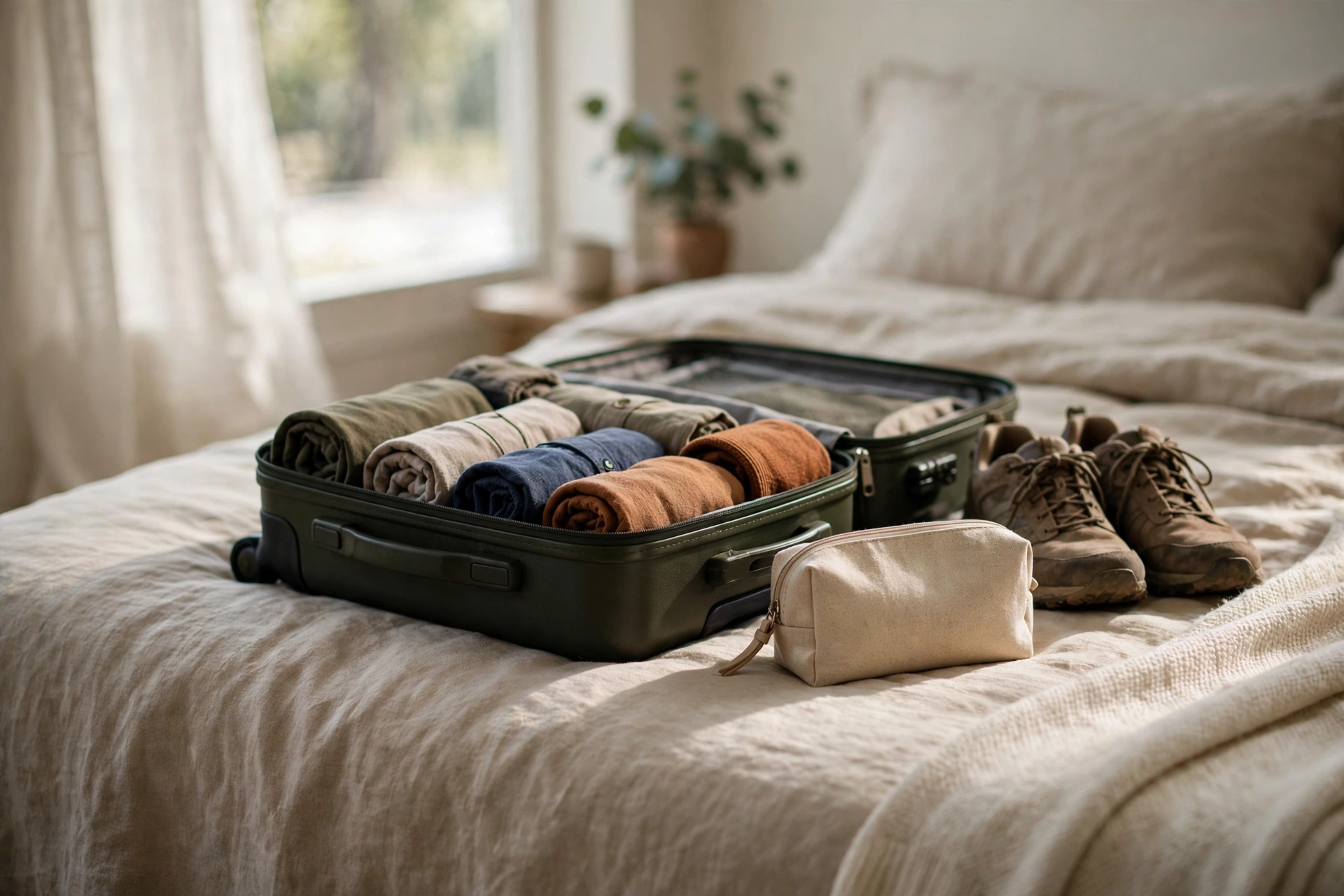
Start With the Bag, Not the Clothes
Every carry-on-only plan starts with the bag itself, because the bag sets the limit for everything else. Before you pack a single shirt, check your airline’s published carry-on size and weight limits. Many airlines cap carry-ons around 22 x 14 x 9 inches, but budget carriers are often stricter, and weight limits vary widely, so the number on your airline’s website is the only one that matters for your flight.
Measure your bag at home, wheels and handles included, and weigh it once it is packed. If you are flying with more than one airline, pack to the strictest limit on your itinerary. Most travelers also get a small personal item, such as a backpack or tote, in addition to the carry-on. Treat that personal item as part of the plan from the start: it holds your valuables, electronics, and anything you will need during the flight, so the overhead bag never has to be opened mid-journey.
Build a Capsule Wardrobe That Covers Seven Days
Seven days does not mean seven different outfits. It means a small set of pieces that all work together, so every top matches every bottom and one layer handles changing weather. Choose a neutral base — navy, black, grey, or olive — and add one or two accent colors through a scarf, a shirt, or a light layer. If a piece only goes with one other item in the bag, leave it behind.
A workable formula for a week looks like this: three or four tops, two bottoms, one layer for warmth, and one outfit that can pass for a nicer dinner. Plan to rewear bottoms two or three times and tops at least twice, and pack fabrics that resist wrinkles and dry quickly. Merino wool, for example, stays fresh across several wears, which is why it shows up in so many one-bag packing lists. The goal is not to look identical every day; it is to have enough combinations that nobody, including you, notices the repeats.
A Simple Seven-Day Packing List
Use this list as a starting point, then adjust it for your destination’s weather and activities:
- 3–4 tops in coordinating colors, including one you can dress up
- 2 bottoms, such as one pair of trousers and one pair of jeans or a skirt
- 1 warm layer, like a light jacket, cardigan, or fleece
- 1 pair of comfortable walking shoes, worn on the plane, plus one lighter pair if you truly need it
- 7 sets of underwear and socks, or fewer if you plan a laundry stop
- 1 sleep set that doubles as loungewear
- Toiletries in travel-size containers inside a clear quart-sized bag
- Chargers, a small first-aid kit, medications, and travel documents in your personal item
Wear your bulkiest items on the plane: the walking shoes, the jacket, and the heaviest layer. What you wear does not count against your bag’s space, and it is the simplest way to free up room.
Pack for the Plane, Not Just the Destination
Airport security shapes what you can carry, so build the liquids rule into your packing from the start. Each container must be 3.4 ounces (100 milliliters) or smaller, and all of them must fit in a single quart-sized clear bag. If you are unsure whether an item is allowed, the TSA’s What Can I Bring list is the quickest way to check before you leave home: TSA What Can I Bring.
Keep the clear bag, your liquids, and your electronics near the top of your bag so security takes minutes rather than a full repack. Put anything you cannot afford to lose — passport, wallet, medication, phone charger, and a change of clothes for the first day — in your personal item, not in the overhead bag. If your flight is full and your carry-on is gate-checked, you will still have everything essential with you.
Plan One Laundry Stop
The secret to seven days in one small bag is a single laundry stop around day three or four. It does not need to be complicated: a hotel laundry service, a nearby laundromat, or a sink wash for lightweight items all reset your wardrobe and cut the amount you must carry in half. Pack a small bag for dirty laundry to keep it separate, and choose at least a few items that dry overnight so you are never waiting on clothes in the morning.
If your trip includes a hotel stay, check whether laundry facilities are available before you arrive. A mid-trip wash also gives you a natural pause in the itinerary — an evening to rest, repack, and plan the second half of the trip with a lighter bag.
Keep Your Days Flexible
A carry-on-only trip rewards a flexible itinerary. Moving between cities is easy when everything you own is on your back or rolling beside you, and changing plans costs nothing when there is no checked bag to reroute. Leave one day loosely planned so weather, a local recommendation, or a delayed train does not unravel the week. If you have a long layover, travelling light makes it far easier to step out and explore — for instance, you could look at places to visit near Hong Kong International Airport if your route takes you through that hub.
Pack a small day bag or a packable tote inside your carry-on for daily outings. It keeps your main bag packed and ready while you explore, and it doubles as extra space on the way home if you pick up a few souvenirs.
Common Carry-On Mistakes to Avoid
Most carry-on trips go wrong in predictable ways. Packing for every possible weather instead of the forecast is the first one — check the forecast a day or two before departure and pack for that, not for every season. The second is filling the bag at home so tightly that nothing fits back in after the first day; leave a little space for the things you buy along the way. The third is packing “just in case” items you never use: if you have not reached for something by day three, it was dead weight. Finally, do not forget the return journey — your bag must close just as easily on the last day as it did on the first.
FAQ:
Can you really travel for seven days with only a carry-on?
Yes, if you plan a capsule wardrobe and one laundry stop. Most travelers overpack clothes, not essentials, and rewearing bottoms plus a mid-trip wash covers a full week comfortably.
What if my airline has a strict carry-on weight limit?
Weigh your packed bag at home and shift heavy items, such as electronics and books, into your personal item, which is usually weighed separately or not at all. Wear your heaviest shoes and jacket on the plane.
Do packing cubes actually help?
They help with organization and compression, especially for separating clean and dirty clothes. They do not create space out of nothing, so they work best as part of a smaller wardrobe, not as a fix for overpacking.
What should you never pack in a carry-on?
Anything sharp, flammable, or over the liquids limit, plus anything you cannot replace easily if it is confiscated at security. When in doubt, check the TSA list or leave it behind.
Final Thoughts
A carry-on-only trip for seven days is less about packing skill and more about deciding what the week actually needs. Choose a bag that fits your airline’s limits, build a small wardrobe where everything matches, plan one laundry stop, and keep your essentials close on travel days. You will board faster, move easier, and come home without the usual baggage-claim wait — and the next time you plan a trip, the small bag will be the first thing you reach for.