
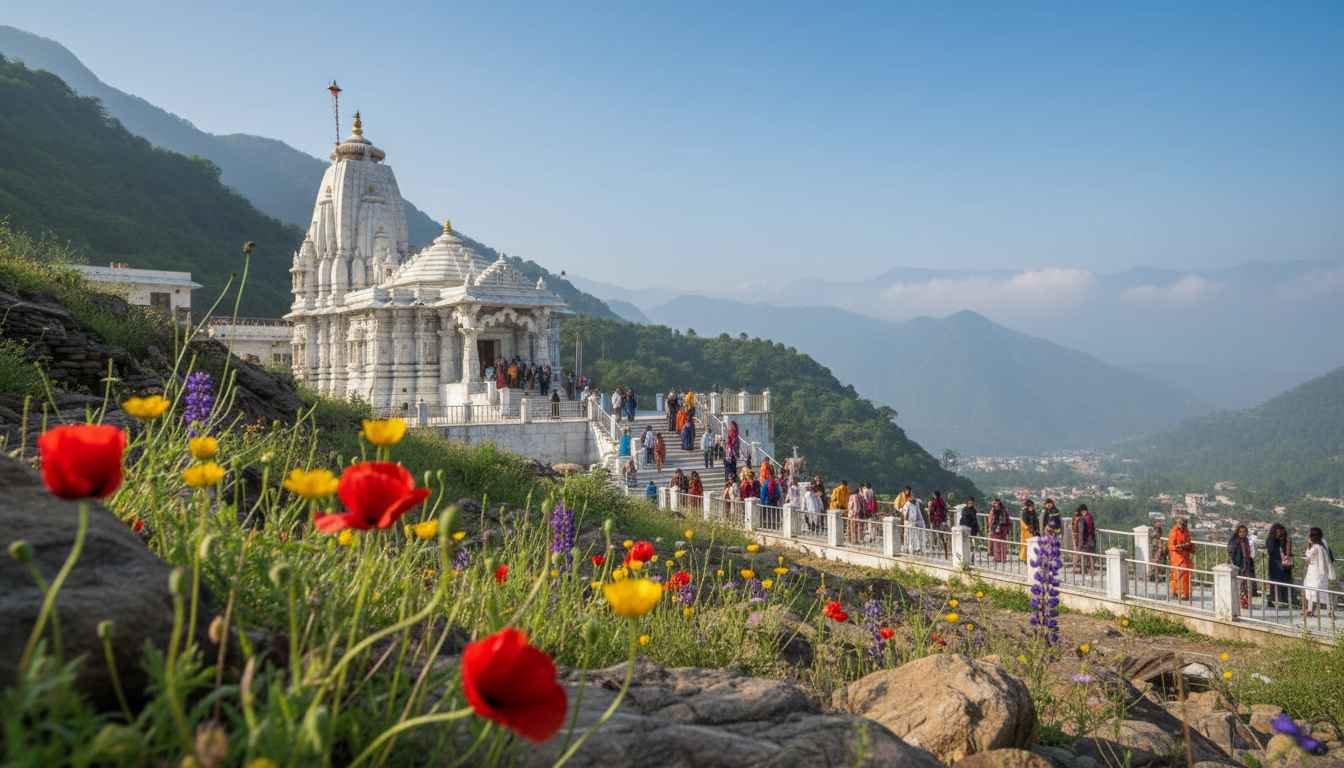
Picture yourself stepping off the bus in Katra as the Trikuta Mountains rise in front of you, the air cooler than the plains below and the whole town moving at a pilgrim’s pace. Most people come here for one reason — the shrine of Vaishno Devi — but if you plan even a day or two around that journey, Katra makes a surprisingly good base for temples, hill air and quiet lakes. This guide covers the places that are actually worth your time in and near Katra, and how to fit them together without rushing.
The Vaishno Devi Pilgrimage: The Reason Most People Come
The Vaishno Devi temple sits high on the Trikuta Mountains above Katra, and the walk up from the town is the centrepiece of any visit. The trek is long and uphill, so start early, wear comfortable walking shoes, carry water, and pace yourself rather than trying to race to the top. Pilgrims traditionally register for the yatra before setting out, and it is worth checking the current registration and crowd arrangements before you travel, since they can change with the season. If walking the whole way does not suit you, pony and palanquin services and a helicopter option operate on this route, subject to availability and weather — check current options rather than assuming them. Give the shrine day the respect it deserves: this is a devotional journey for most people around you, not a sightseeing stop, so dress modestly and keep the pace unhurried.
Other Temples in and Around Katra
Before or after the main trek, two smaller shrines are worth a quiet visit. Banganga, on the lower part of the route, is where many pilgrims pause at the start of the climb, and Baba Dhansar, a short drive from Katra, is a peaceful temple set beside a spring and a small waterfall. Neither needs a full day, and both give you a sense of the devotional landscape that shapes this town. If temple towns are a theme of your travels, you may also enjoy reading about places to visit in Tirupati other than temples, another pilgrimage town where the sights extend well beyond the main shrine.
Patnitop: A Hill-Station Day Trip
When you want a break from the pilgrim crowds, head to Patnitop, the pine-covered hill station above the Chenab valley. The air is noticeably cooler, the meadows are good for an easy walk or a picnic, and the views across the Shivalik range are the main attraction — this is a place to slow down, not to tick off sights. In winter the area can see snow, which changes the whole character of a visit, so check road and weather conditions before you set out in the colder months. A day trip is enough for most visitors: leave Katra in the morning, spend the middle of the day walking and eating in Patnitop, and return before dark.
Mansar Lake and the Countryside Near Katra
Mansar Lake, a short drive from Katra, is a calm, wooded lake ringed by low hills, and it works well as a half-day outing, especially if you are travelling with family. Boating is available on the lake, and the lakeside is a pleasant place for a slow walk rather than a packed itinerary. The surrounding countryside — small villages, terraced fields and local markets in Katra town itself — is worth an unhurried hour too. Katra’s bazaars sell prasad, dry fruits, woollens and souvenirs; browse them in the evening when the town is at its liveliest, and try the local food stalls rather than eating only at your hotel.
Planning Your Katra Trip
Katra is best approached through Jammu, which has the nearest airport and a well-connected railway station, with road transport onward to Katra. Most visitors pair the pilgrimage with one or two of the outings above: allow two days if you only want the shrine and one nearby temple, and three to four days if you want to add Patnitop and Mansar Lake without hurrying. The most comfortable months for walking are generally spring and autumn, when the weather is mild; summer brings heat on the lower slopes, and winter brings cold and possible disruption on the hill roads. Pack layers, good walking shoes and rain protection whatever the season, and keep your plans flexible around the yatra itself — it sets the rhythm of the whole trip.
FAQ: Places to Visit in Katra
How many days do you need in Katra?
Two days cover the Vaishno Devi trek and the town itself. Add a third day for Patnitop or Mansar Lake.
Do you need to register for the Vaishno Devi yatra?
Registration is normally required, so check the current official arrangements before you travel and carry identification.
Is Katra worth visiting if you are not on a pilgrimage?
Yes, though the town revolves around the shrine. Patnitop, Mansar Lake and the hill scenery make it a pleasant short break, especially combined with Jammu.
When is the best time to visit Katra?
Spring and autumn usually offer the mildest walking weather. Check seasonal conditions before booking, as summer heat and winter cold both affect the trek.
Final Thoughts
Katra rewards travellers who treat it as more than a transit stop. Do the pilgrimage properly, give yourself one slow hill day in Patnitop and one quiet lakeside morning at Mansar, and you will leave with a fuller picture of this corner of Jammu and Kashmir than the shrine alone could give you.