
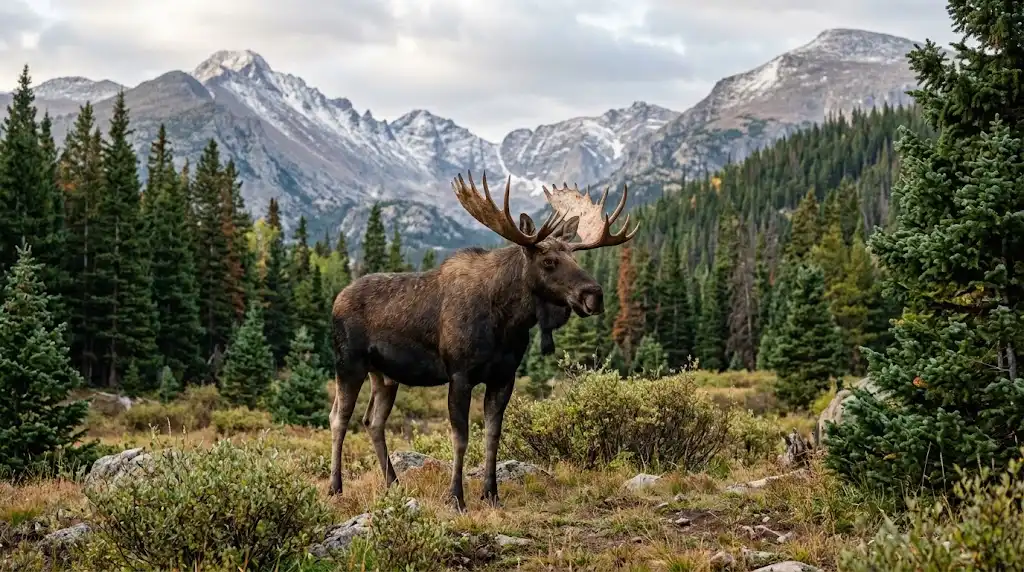
This guide explains the main legal considerations for moose hunting near Silverthorne in 2026, including licenses, hunting areas, season dates, land access, equipment, and responsibilities after a harvest. Regulations can change, and the rules for a particular hunt depend on the license and Game Management Unit (GMU). Always confirm current requirements with Colorado Parks and Wildlife (CPW) before heading into the field.
Is Moose Hunting Legal Near Silverthorne, Colorado?
Moose hunting is permitted in Colorado only when a hunter complies with applicable state regulations and holds the appropriate valid license. The fact that moose inhabit an area, or that an area looks suitable for hunting, does not mean a hunter can legally harvest one there.
Colorado Parks and Wildlife manages moose licenses through a limited licensing system. Hunters must apply through the applicable primary draw and follow the specific hunt code, season, location, and animal restrictions printed for their license.
Before planning a hunt near Silverthorne, identify the exact GMU and hunt code that applies to the intended location. Do not assume that a license for one unit authorizes hunting in another. Confirm the boundaries using current CPW maps and the official Colorado Big Game brochure.
Understanding Colorado Moose Hunting Licenses
Colorado moose licenses are limited, so hunters should understand the application process before making travel or lodging arrangements. A general hunting license or permission to access private land does not replace the species-specific license required to hunt moose.
1. Apply Through the Appropriate Draw
CPW states that moose licenses are available through the primary draw. Applicants should review the current year’s application requirements, qualifying-license rules, hunt codes, and deadlines before applying. A draw application does not guarantee that a license will be awarded.
2. Check Hunter Education Requirements
Colorado requires approved hunter education for individuals born on or after January 1, 1949, before they apply for or purchase a Colorado hunting license. Hunters should confirm that their course completion record or accepted proof is available when required.
3. Review Identification and Application Requirements
Hunters need the identification and information required by CPW to apply for a license. Requirements may differ according to residency status and the type of application. Check the current official instructions instead of relying on an older application guide.
4. Understand License Limits
Colorado applies specific limits to moose licenses, including a lifetime bag limit of one antlered moose under the standard rules, with exceptions for certain special licenses. Hunters who have previously harvested an antlered moose must carefully review their eligibility before applying for an antlered or either-sex license.
Read the conditions attached to the exact license you intend to pursue. Never assume that preference points, a previous hunting license, or a different species license gives you authorization to harvest a moose.
Moose Hunting Season Dates for 2026
Colorado’s moose seasons vary by license and hunt code. The 2026 Colorado Big Game brochure lists the general season windows below, but the dates printed for a particular hunt code and unit take priority.
- Archery: The general window listed in the 2026 brochure is September 12–30.
- Muzzleloader: The general window listed is September 12–20.
- Rifle: The general window listed is October 1–14, unless a hunt code specifies otherwise.
These are broad season windows, not confirmation that a particular license is valid for all those dates or near Silverthorne. Before travelling, verify the hunt code, GMU boundaries, sex restrictions, and exact dates in the current CPW brochure.
Where Can You Hunt Moose Near Silverthorne?
Silverthorne is located in Colorado’s mountain region, but hunting eligibility is determined by the designated GMU and the conditions of the license rather than by the nearest town alone. A map pin, trailhead, forest boundary, or wildlife sighting is not sufficient evidence that a location is open to a particular moose hunt.
Use CPW’s official hunting atlas and current big-game regulations to confirm:
- The GMU that contains the intended hunting location.
- Whether the license authorizes hunting in that unit.
- Whether the land is public or private.
- Any property-specific restrictions or access permissions.
- Seasonal closures, road closures, wilderness rules, and other area restrictions.
Outdoor destinations can be useful for general trip planning, but they should not be treated as approved hunting locations without checking the rules. For regional travel inspiration, see places to visit in Colorado, places to visit in Ozark National Forest, and outdoor activities around Lake of the Ozarks. These guides are for travel inspiration and do not establish hunting access or moose-season eligibility.
Public Land, Private Property, and Access Rules
A valid hunting license does not give a hunter unrestricted access to every property within a GMU. Before entering land, determine whether it is public, private, leased, or subject to special access conditions.
On private land, obtain the landowner’s permission where required. On public land, check the responsible agency’s current access rules, closures, motorized-use restrictions, and any additional conditions that apply to the area. Some roads or trails may be closed even when the surrounding land is otherwise accessible.
Colorado’s official hunting guidance also emphasizes that hunters must make a reasonable effort to obtain permission to enter and retrieve an animal. Plan for legal access before taking a shot, particularly in steep terrain or locations near property boundaries.
If your trip includes outdoor recreation beyond hunting, review general destination and access information separately. Articles such as the Peter Igo Park travel guide and destination planning ideas may inspire a trip, but they do not replace official land-access maps or hunting regulations.
Legal Hunting Equipment and Methods
Colorado specifies which firearms, ammunition, bows, and other methods are permitted during particular big-game seasons. The rules for moose must be checked against the applicable season and the current Big Game brochure.
For example, CPW’s moose guidance specifies minimum requirements for certain centerfire rifle bullets and muzzleloading projectiles. The exact equipment rules depend on the hunting method and season, so hunters should confirm the current legal-firearms table before purchasing equipment or travelling.
Keep these practical checks in mind:
- Confirm that your weapon and ammunition are legal for the season and hunt code.
- Check firearm transportation and vehicle-storage rules before travelling.
- Follow all restrictions on shooting from or across public roads.
- Carry your valid license and required identification while hunting.
- Do not use equipment or methods that are prohibited for the specific hunt.
Hunters should never assume that equipment legal for one big-game species or season is automatically legal for moose. The current official regulations are the controlling source.
Wildlife Identification and Ethical Hunting
Responsible hunting starts with positive animal identification and a clear understanding of the license’s restrictions. Moose, other wildlife, and animals seen at a distance can be difficult to distinguish in changing light, thick vegetation, or mountainous terrain.
Before hunting, review the species and sex restrictions on the license. Take time to identify the animal correctly, understand the background and what lies beyond the target, and avoid taking a shot when identification or conditions are uncertain.
Hunters must also comply with Colorado’s rules concerning edible meat, evidence of sex, tagging, and the reporting of accidentally killed big-game animals. If an incident occurs, contact CPW or the appropriate authority as directed by current regulations.
What to Do After Harvesting a Moose
Colorado requires additional reporting and inspection steps for harvested moose. These duties are part of legal compliance, not optional administrative tasks.
Complete the Mandatory Report
Moose license holders must complete and return the mandatory report within the period specified by CPW. The official guidance states that the report is required within 30 days after the hunting season ends, including for license holders who did not hunt or harvest an animal.
Arrange the Required Inspection
Hunters who harvest a moose must present it for inspection within five working days after harvest, following CPW’s instructions. Requirements for the head, lower jaw, antlers, or an incisor depend on whether the animal is antlered or antlerless. Check the current inspection instructions before transporting the animal.
Tag and Transport the Animal Correctly
Follow the current rules for attaching the carcass tag and retaining the required evidence of sex. Do not sign, remove, detach, or attach tags in a way that violates the instructions on the license or in the regulations. If a tag is lost or damaged, contact CPW for the correct procedure before continuing to hunt.
Planning a Safe Hunting Trip
Mountain weather, steep terrain, changing visibility, and remote access can make a hunting trip more demanding than expected. Build a practical plan before leaving and share it with someone who is not travelling with you.
- Check the forecast and be prepared for rapid weather changes.
- Carry navigation tools and know the intended route and legal access points.
- Bring sufficient water, food, warm clothing, and first-aid supplies.
- Check road and trail closures with the relevant land-management agency.
- Arrange a legal and safe method for transporting equipment and any harvested animal.
- Allow time for required reporting, inspection, and transport procedures.
For vehicle preparation, consult our guides to routine vehicle care, vehicle maintenance, and vehicle performance and servicing. If a route requires driving on rough surfaces, do not assume that a standard vehicle is suitable for every road or trail.
Our overview of the street legal mini Jeep also explains why vehicle classification and access rules matter. A vehicle’s off-road appearance does not mean it is permitted on every public road, trail, or hunting access route.
Common Mistakes to Avoid
- Assuming that a moose sighting means the location is open to hunting.
- Using a license outside its designated GMU or dates.
- Relying on an old year’s brochure without checking current rules.
- Entering private property without required permission.
- Assuming that equipment legal for another species or season is also legal for moose.
- Forgetting mandatory reporting or the required post-harvest inspection.
- Ignoring road closures, firearm transportation rules, or evidence-of-sex requirements.
Frequently Asked Questions
Is moose hunting legal in Silverthorne, Colorado?
Moose hunting is legal in Colorado only under the applicable state rules and a valid moose license. Whether a specific location near Silverthorne is eligible depends on the GMU, hunt code, season, land access, and license conditions.
Do I need a special license to hunt moose?
Yes. Colorado manages moose through a limited licensing system. Review the current primary-draw process and the exact license requirements published by Colorado Parks and Wildlife.
What are the 2026 moose hunting dates?
The 2026 brochure lists general archery, muzzleloader, and rifle windows, but exact dates vary by hunt code. Verify the dates and restrictions on the specific license before planning your trip.
Can I hunt moose on any public land near Silverthorne?
No. A location must fall within the authorized hunt area, be open to the applicable activity, and meet all access requirements. Public ownership alone does not guarantee that moose hunting is permitted at a particular site.
What must I do after harvesting a moose?
Follow CPW’s current rules for tagging, evidence of sex, mandatory reporting, and inspection. Moose harvest inspection is time-sensitive, so review the official instructions before the hunt.
Where can I verify the current rules?
Use Colorado Parks and Wildlife’s official moose hunting page, the current Colorado Big Game brochure, and the official maps and rules for the applicable GMU. These sources should take precedence over older articles, informal advice, and third-party summaries.
Final Thoughts
Planning a legal moose hunt near Silverthorne requires careful attention to Colorado’s licensing system, GMU boundaries, season dates, legal equipment, property access, and post-harvest responsibilities. Regulations can change from year to year, so a guide is only a starting point.
Before travelling, confirm your eligibility, obtain the appropriate license, check the exact hunt code and location, and review the current official rules. Responsible preparation helps protect wildlife, supports lawful hunting, and reduces the risk of costly mistakes.
Explore more outdoor, travel, and vehicle-related articles on the OmniFlowHub blog or visit the OmniFlowHub homepage for additional guides.