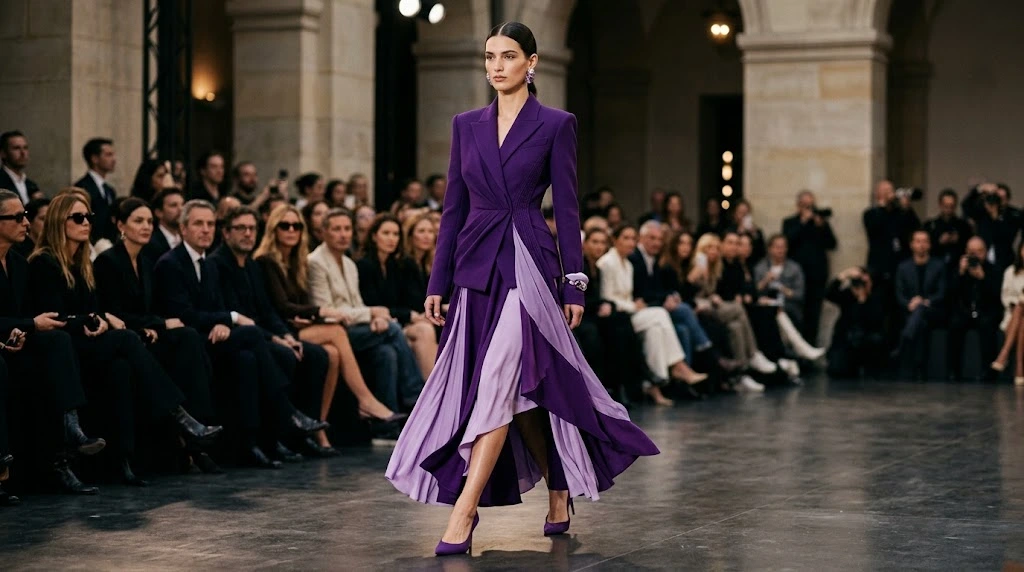
Paris Fashion Week has always been a place where established fashion rules are challenged. For the Spring/Summer 2026 season, one of the more noticeable developments was the renewed presence of purple across runway collections, from soft lavender and lilac to stronger violet and deeper purple tones.
The color was especially interesting because recent fashion seasons had been heavily influenced by restrained neutrals, including black, gray, ivory, navy, and various shades of brown. The emergence of purple offered a more expressive alternative without requiring designers to abandon sophisticated silhouettes or polished styling.
Fashion coverage of the Spring/Summer 2026 shows identified purple as a major runway color, with shades ranging from periwinkle and lilac to lavender appearing across collections.
So why did purple make such an impression, and how can the runway trend translate into everyday wardrobes?
Why Purple Stood Out at Paris Fashion Week
Purple occupies an unusual position in fashion. It can look delicate and romantic when used as a pale lavender, dramatic when rendered as deep violet, or energetic when designers choose saturated shades.
That flexibility makes it useful for designers who want to introduce color without relying exclusively on bright primary tones.
At the Spring/Summer 2026 shows, purple appeared in several different forms rather than being restricted to one precise shade. Coverage from Essence highlighted a broad purple palette, including periwinkle, lilac, lavender, and other variations, while noting appearances at houses and labels including Versace, Sergio Hudson, and PH5.
This range is part of what made the trend interesting. Consumers do not necessarily have to wear an intense violet outfit to participate. A muted lavender knit, purple handbag, soft lilac dress, or violet shoe can create a similar effect with less visual intensity.
From Quiet Luxury to More Expressive Color
The rise of purple came during a broader transition in fashion.
For several seasons, quiet luxury and understated dressing helped establish black, gray, ivory, navy, and other restrained shades as reliable wardrobe choices. Spring/Summer 2026 runway coverage suggested that designers were becoming more willing to experiment with stronger colors and more noticeable visual combinations.
Who What Wear’s review of Spring/Summer 2026 color trends described a move away from the safest shades and highlighted colors including powder pink and emerald green alongside other expressive tones.
Purple therefore did not appear in isolation. It formed part of a broader return to color.
That distinction is important. Rather than simply replacing one dominant neutral with one new universal shade, the 2026 runways offered a wider color vocabulary.
How Designers Used Purple
One reason purple gained attention was its versatility across different garment categories.
Purple Tailoring
Tailoring can make a traditionally playful color appear more sophisticated. A purple blazer, structured suit, or sharply cut trouser can create a statement while maintaining the clean lines associated with modern tailoring.
Using a restrained silhouette is particularly useful when the color itself is already visually strong.
Soft Lavender Dresses
Lavender offers a gentler approach. Its pale quality works naturally with spring and summer fabrics, particularly flowing dresses, lightweight knitwear, skirts, and soft separates.
The shade can also work with neutral accessories, allowing the garment to remain the central focus.
Deep Violet Eveningwear
At the opposite end of the spectrum, deeper purple shades can create a more dramatic evening look. Satin, velvet, sequins, and other reflective or textured materials can make the color appear richer under artificial lighting.
Purple Accessories
For people who prefer understated outfits, accessories may be the easiest way to experiment. A purple handbag, shoe, scarf, belt, or pair of sunglasses can introduce the trend without requiring a complete wardrobe change.
Purple Versus the Other Major 2026 Fashion Colors
Purple was part of a much larger color story during 2026.
Butter yellow, wispy pink, tangerine, mocha, blue, and other shades appeared across seasonal fashion coverage. Vogue’s Summer 2026 color report described the season as unusually diverse, with multiple shades appearing across ready-to-wear, handbags, and footwear rather than one single color completely dominating every category.
That broader palette helps explain why purple felt fresh. It offered a distinctly different direction from warm browns and soft neutrals while still being adaptable enough for everyday styling.
Why Purple Works With Neutral Wardrobes
One reason the color can move from runway to real life is its ability to work with familiar neutrals.
Lavender can be paired with white, cream, gray, or denim. Deeper purple can work with black, charcoal, chocolate brown, or navy. More adventurous combinations can introduce pink, red, green, or yellow.
This flexibility means that someone does not necessarily need a dedicated purple wardrobe. One statement piece can be incorporated into clothes they already own.
The principle is similar to the way a statement accessory can transform an otherwise simple outfit: the color becomes the visual focal point while the rest of the wardrobe provides balance.
How to Wear Purple Without Overdoing It
A runway trend can look intimidating when presented as a complete designer outfit. Everyday styling usually works better when the idea is adapted to personal comfort.
Start With One Piece
Try a purple top, handbag, pair of shoes, or lightweight jacket rather than wearing several purple pieces simultaneously.
Use White for a Fresh Look
White and lavender create a clean combination that works particularly well for spring and summer.
Try Purple With Denim
Denim can make a vivid color feel more casual. A purple blouse with jeans is considerably easier to wear every day than a head-to-toe runway-inspired look.
Use Darker Neutrals for Evening
Deep violet can work especially well with black or charcoal for evening outfits, creating contrast without relying on metallic details.
Experiment With Color Blocking
For a stronger fashion statement, purple can be paired with another expressive color. Purple and red, for example, have become an increasingly visible combination in later runway and street-style coverage.
Purple in Men’s Fashion
Purple is not limited to womenswear.
Men can incorporate the color through knitwear, shirts, overshirts, ties, pocket squares, sneakers, outerwear, or tailoring. Muted purple and plum can be particularly accessible for people who are more comfortable with neutral clothing.
A deep purple sweater with gray trousers, for example, provides a subtle way to introduce color without creating an overly bright outfit.
Readers interested in men’s style can also explore rockabilly men’s fashion for another example of how distinctive style elements can be incorporated into modern wardrobes.
What Purple Says About the Direction of Fashion
Color trends often reveal more than a simple preference for one shade.
When designers collectively move toward stronger colors, it can indicate a broader appetite for visual experimentation. However, fashion trends rarely move in one direction permanently. Neutral colors remain commercially important, while bold colors can coexist with minimalist dressing.
Recent fashion coverage illustrates exactly this tension. Vogue’s reporting on Fall/Winter 2026 highlighted the continued strength of black while also pointing to colorful runway looks as an important source of creative energy.
This suggests that the future wardrobe is unlikely to be exclusively colorful or exclusively neutral. Instead, consumers can expect both approaches to coexist.
Is Purple a Passing Trend?
Some runway colors disappear quickly, while others become part of the broader fashion vocabulary.
Purple has an advantage because it contains a wide range of shades. If one particular version loses momentum, another can remain relevant. Lilac, lavender, plum, violet, aubergine, and brighter purple tones can each create very different impressions.
The color has also appeared repeatedly across different fashion seasons. Later coverage has documented the continued presence of stronger purple shades and combinations, suggesting that the broader interest in purple did not end with a single Spring/Summer 2026 collection.
For example, Vogue’s reporting on 2026 fashion identified cobalt blue as another strong color development, illustrating how quickly the fashion conversation can move between different expressive shades.
How Purple Can Work With Different Personal Styles
Minimalist Style
Choose pale lavender or one small purple accessory against an otherwise neutral outfit.
Classic Style
A deep purple blazer, tailored trousers, or structured handbag can add color while maintaining traditional proportions.
Romantic Style
Soft lavender, lilac, flowing fabrics, and delicate textures can emphasize the lighter side of the purple palette.
Street Style
Brighter violet shades can be paired with denim, sneakers, oversized silhouettes, or contrasting colors for a more contemporary look.
Statement Dressing
Those comfortable with stronger fashion choices can experiment with monochromatic purple outfits or combine purple with another saturated shade.
For additional inspiration around unconventional style, readers can explore trendy affordable fashion and fashion styling inspired by Black Desert Online.
The Influence of Fashion Week Beyond the Runway
Paris Fashion Week does not influence only luxury fashion editors and designers. Runway colors often appear later in retail collections, accessories, beauty products, street style, and social media.
Once consumers begin seeing a color repeatedly, it can become easier to recognize and incorporate into everyday fashion.
The effect also extends beyond clothing. Beauty brands can translate runway colors into makeup and nail collections, while accessories and home products may adopt similar palettes.
OmniFlowHub’s coverage of beauty professionals and beauty trends provides another perspective on how fashion and beauty industries overlap.
Fashion Trends and Personal Expression
The most useful way to approach a runway trend is not to treat it as a requirement.
A color can become fashionable without being suitable for every person or every wardrobe. Skin tone, personal preference, existing clothes, occasion, and lifestyle all influence whether a particular shade feels comfortable.
Fashion works best when trends provide ideas rather than rigid rules.
For someone who loves neutrals, a small purple accessory may be enough. Someone who enjoys experimental dressing might prefer a saturated purple suit or an unusual color combination.
Frequently Asked Questions
What color dominated Paris Fashion Week Spring/Summer 2026?
Purple was one of the prominent color stories identified in coverage of the Spring/Summer 2026 Paris shows, appearing in shades including lilac, lavender, periwinkle, and stronger purple tones. It was part of a broader move toward more expressive runway color rather than the only color of the season.
How can I wear purple casually?
Start with one item such as a purple top, handbag, scarf, or pair of shoes. Pairing purple with denim, white, gray, cream, or other familiar neutrals can make the trend easier to incorporate into everyday outfits.
Is lavender still fashionable?
Lavender was a notable part of the Spring/Summer 2026 color palette, alongside other pastel shades. Its softer appearance makes it an accessible alternative to highly saturated purple.
Can men wear purple?
Yes. Purple can be incorporated into men’s wardrobes through shirts, knitwear, tailoring, ties, accessories, sneakers, and outerwear. Deeper plum and muted purple shades can work particularly well with neutral trousers and jackets.
What colors go well with purple?
Depending on the shade, purple can work with white, cream, gray, black, denim, brown, pink, red, green, and yellow. Softer purple shades generally create a more understated appearance, while saturated shades produce stronger contrast.
Final Thoughts
The unexpected prominence of purple at Paris Fashion Week reflected a broader change in fashion: designers were becoming more willing to move beyond the restrained palette that had dominated recent seasons.
From delicate lavender and lilac to stronger violet tones, purple offered designers a flexible way to add personality to tailoring, dresses, accessories, and statement pieces.
Rather than treating purple as a temporary rule that everyone must follow, it makes more sense to view the trend as an invitation to experiment. A single accessory can be enough, while those who enjoy bold fashion can embrace the color more fully.
Paris Fashion Week ultimately demonstrates why runway trends remain influential: they provide a preview of the colors, silhouettes, and styling ideas that may shape the way people dress beyond the runway.