
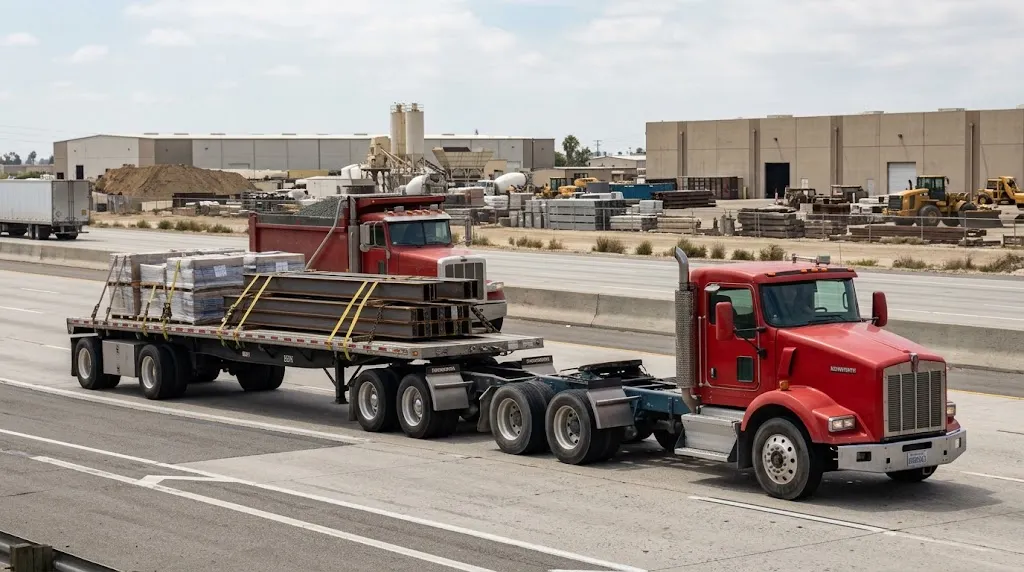
Federal Motor Carrier Safety Administration records identify WC LOGISTICS INC. under USDOT Number 992142 as an active carrier authorized for motor-carrier property operations, with its listed physical address in Buena Park, California.
This guide explores what WC Logistics does, the role of trucking in modern supply chains, the equipment used in freight transportation, and the factors businesses should consider when evaluating a logistics partner.
What Is WC Logistics?
WC Logistics, Inc. operates in the commercial trucking and transportation sector. Its company materials state that it has provided trucking services since 1968 and serves customers across California and Arizona.
The company’s published information emphasizes safety, service, and stewardship as central themes. Its transportation operation uses different types of equipment to support varying cargo and project requirements.
That equipment-focused model is important because freight transportation is not one-size-fits-all. A shipment involving construction materials, aggregates, industrial equipment, or other specialized cargo may require a different vehicle configuration from conventional general freight.
WC Logistics and the Role of Trucking in Supply Chains
Supply chains connect suppliers, manufacturers, distributors, contractors, retailers, and customers. Trucking provides the physical transportation layer that moves goods between these points.
Even when businesses use warehouses, rail networks, ports, or other transportation modes, trucks often provide the first-mile or last-mile connection between facilities.
This makes reliable trucking important for several reasons:
- Materials need to reach project sites on schedule.
- Manufacturers depend on dependable inbound transportation.
- Distributors need predictable movement between facilities.
- Construction companies often require specialized hauling equipment.
- Businesses need transportation providers capable of adapting to different cargo requirements.
Our related article on modern supply-chain solutions explores another aspect of how logistics operations support business continuity.
A Broad Range of Trucking Equipment
One of the notable characteristics of WC Logistics is its range of trucking equipment. The company’s published information lists dump trucks, transfers, end-dumps, bottom dumps, flatbeds, and specialty-designed equipment.
Different equipment types are useful for different transportation requirements. Understanding these differences helps businesses determine which type of carrier is appropriate for a particular project.
Dump Trucks
Dump trucks are commonly associated with hauling bulk materials and construction-related loads. Their design allows material to be unloaded efficiently at a destination.
End-Dump Trailers
End-dump equipment can be useful for hauling materials that need to be discharged by raising the trailer body. The appropriate application depends on the cargo, site conditions, and loading and unloading requirements.
Bottom Dumps
Bottom-dump equipment releases material through openings beneath the trailer. This configuration can be useful for certain bulk-material applications where controlled discharge is important.
Flatbeds
Flatbed trailers provide an open platform without the enclosed sides of a conventional trailer. They can accommodate certain oversized, irregularly shaped, or construction-related loads when properly secured and transported according to applicable requirements.
Specialty Equipment
Specialized transportation requirements may call for equipment designed for a particular cargo or operating environment. The availability of different configurations can give a logistics company more flexibility when handling project-specific transportation needs.
Why Equipment Selection Matters
Selecting the right equipment can affect loading procedures, transportation efficiency, cargo security, site access, unloading, and overall project coordination.
For example, a shipment involving loose aggregate may require very different equipment from a large piece of machinery. Similarly, a construction project may have site restrictions that influence the type of truck or trailer that can be used.
Businesses should therefore provide logistics providers with accurate information about:
- Material or cargo type
- Approximate weight
- Dimensions
- Loading method
- Unloading method
- Pickup and delivery locations
- Site access restrictions
- Required delivery schedule
Detailed information allows a carrier to determine the appropriate transportation approach rather than attempting to solve equipment requirements after dispatch.
Safety as a Core Transportation Requirement
Commercial trucking involves safety requirements covering vehicles, drivers, cargo, operating procedures, and regulatory compliance. WC Logistics states that safety is a primary focus of its transportation operation.
Federal records currently identify WC LOGISTICS INC. as an active carrier with USDOT Number 992142 and property-carrier authority.
Safety should be considered as an operational discipline rather than simply a marketing statement. Businesses evaluating transportation providers can review licensing, operating authority, insurance requirements, equipment condition, driver qualifications, and applicable regulatory records.
Understanding WC Logistics’ Operating Footprint
WC Logistics’ own materials describe service coverage in California and Arizona.
Its federal carrier record lists the company at 7351 Walnut Avenue in Buena Park, California. The same record identifies 385 power units and 750 drivers in the current carrier snapshot.
These figures provide a useful indication of the scale represented in the federal carrier record, although fleet and driver counts can change as companies update their regulatory filings.
For companies evaluating a carrier, geographic coverage should be considered alongside equipment availability, scheduling, cargo requirements, and pickup and delivery locations.
How WC Logistics Fits Into Construction and Industrial Transportation
Specialized trucking is particularly important for industries that move materials in large volumes or require non-standard equipment.
Construction, aggregate, infrastructure, industrial, and related businesses may depend on transportation for materials moving between suppliers, processing locations, storage areas, and project sites.
WC Logistics’ equipment mix is relevant to these applications because dump and flatbed configurations can serve different categories of project transportation.
Our article about Emerald Eagle Transport provides another perspective on how transportation companies contribute to the movement of goods and materials.
Supply Chain Efficiency Is More Than Fast Delivery
The phrase “speed” is often associated with logistics, but efficient transportation requires more than simply moving a truck quickly.
Effective logistics coordination can involve:
- Planning pickup and delivery windows
- Matching cargo with suitable equipment
- Coordinating drivers and routes
- Managing loading and unloading requirements
- Communicating schedule changes
- Maintaining vehicle availability
- Meeting applicable safety requirements
- Reducing avoidable empty or inefficient movements
Precision comes from coordinating these elements so that transportation supports the wider business process rather than operating as a disconnected activity.
Route Planning and Operational Coordination
Transportation planning begins before a truck reaches the pickup location. Dispatch teams need accurate information about the shipment, route, timing, equipment, and destination.
For larger or specialized loads, route planning may also involve considerations such as road restrictions, bridge limitations, construction zones, site access, and legal load requirements.
Good communication between the shipper, carrier, driver, and receiving location can reduce delays caused by incomplete information.
Our related article on global supply-chain transportation examines how logistics coordination can affect broader freight operations.
Technology and Modern Logistics
Modern transportation operations increasingly rely on digital tools for scheduling, communication, documentation, routing, maintenance, and operational visibility.
Technology can help logistics teams organize large amounts of information, but technology alone does not eliminate the need for experienced transportation professionals.
Human decision-making remains important when unexpected circumstances arise, such as weather disruptions, equipment problems, construction delays, changing delivery windows, or site-access issues.
This is one reason logistics should be viewed as a combination of technology, equipment, people, planning, and communication.
Fleet Maintenance and Reliability
Transportation reliability depends heavily on vehicle condition. Preventive maintenance helps carriers identify mechanical problems before they become larger operational issues.
WC Logistics’ published career information highlights the availability of full-time mechanics and company equipment as part of its operating environment.
For a logistics customer, maintenance matters because an unexpected vehicle breakdown can affect pickup schedules, project timelines, labor planning, and downstream deliveries.
Businesses should therefore consider how a prospective transportation provider manages fleet maintenance, inspections, repairs, and replacement equipment.
Drivers Are a Critical Part of Logistics Performance
Trucks and technology are important, but drivers remain central to transportation operations. They operate the equipment, interact with customers and job sites, conduct required inspections, and respond to changing road and delivery conditions.
WC Logistics describes its drivers as trained professionals and emphasizes a team-oriented working environment in its career materials.
From a shipper’s perspective, driver experience can influence communication, site coordination, safe equipment operation, and delivery execution.
What Businesses Should Consider Before Choosing a Logistics Provider
A business comparing transportation providers should evaluate more than a quoted rate.
Equipment Availability
Confirm that the carrier has the equipment required for your cargo and delivery environment.
Geographic Coverage
Make sure the carrier regularly operates in the regions relevant to your shipment.
Regulatory Status
For U.S. interstate transportation, businesses can review relevant FMCSA carrier information, including operating authority and USDOT records.
Safety Practices
Review the carrier’s approach to driver training, vehicle inspections, maintenance, and safety procedures.
Communication
Ask how dispatch, scheduling, delivery updates, and issue resolution are handled.
Capacity
Consider whether the provider can support both current requirements and changes in shipment volume.
Total Cost
Compare the complete transportation cost rather than focusing only on the initial quoted freight rate.
WC Logistics and the Broader Logistics Industry
WC Logistics operates within a transportation industry that includes carriers, freight brokers, warehouse operators, distributors, manufacturers, contractors, and other supply-chain participants.
Each participant performs a different function. A carrier physically transports goods, while brokers and logistics coordinators may help connect shippers with transportation capacity.
Understanding these distinctions helps businesses select the right type of provider for their requirements.
Our article on supply-chain efficiency explores another example of how logistics functions can be organized around operational performance.
Comparing Logistics With Other Transportation Models
Not every shipment requires the same transportation strategy. Depending on distance, cargo type, urgency, and volume, businesses may use trucking, rail, ocean freight, air freight, or combinations of these modes.
Trucking is particularly valuable when flexible pickup and delivery points are required because trucks can reach locations that may not have direct rail or port access.
For regional transportation in California and Arizona, a trucking provider with appropriate equipment can therefore be an important part of a company’s distribution strategy.
Environmental and Operational Considerations
Transportation businesses also face increasing pressure to operate efficiently and reduce unnecessary fuel consumption and vehicle miles.
Route planning, preventive maintenance, appropriate equipment selection, load coordination, and reducing inefficient empty movements can all contribute to more efficient transportation operations.
The exact environmental impact of a shipment depends on many variables, including cargo weight, vehicle type, route, fuel consumption, traffic, and operating conditions.
Why Local and Regional Expertise Matters
Regional transportation providers can develop familiarity with local roads, construction activity, industrial areas, project sites, and customer requirements.
That knowledge can be valuable when shipments involve recurring routes or specialized delivery locations.
For businesses operating across California and Arizona, regional experience can complement broader supply-chain planning.
WC Logistics: Company Information at a Glance
| Item | Information |
|---|---|
| Company | WC Logistics, Inc. |
| Industry | Commercial trucking and transportation |
| Primary service area described by company | California and Arizona |
| USDOT Number | 992142 |
| Federal status | Active carrier |
| Operating authority | Motor Carrier of Property, except household goods |
| Listed physical address | 7351 Walnut Ave, Buena Park, CA 90620 |
| Equipment described by company | Dump trucks, transfers, end-dumps, bottom dumps, flatbeds and specialty equipment |
The company-specific information above is based on WC Logistics’ published materials and the current FMCSA carrier snapshot.
Final Thoughts
WC Logistics represents the specialized trucking side of modern supply-chain operations. Its published company information describes transportation services across California and Arizona, with a diverse equipment mix covering dump trucks, transfers, end-dumps, bottom dumps, flatbeds, and specialty-designed equipment.
Federal transportation records identify WC LOGISTICS INC. as an active property carrier under USDOT Number 992142.
For businesses evaluating transportation providers, the key considerations extend beyond speed. Equipment suitability, geographic coverage, safety practices, fleet maintenance, driver capabilities, communication, capacity, and regulatory status all contribute to reliable logistics performance.
As supply chains continue to become more interconnected, transportation providers remain an essential link between suppliers, projects, distribution facilities, and customers. Choosing the right logistics model can help businesses coordinate that movement more effectively.