
Japan is famous for the energy of Tokyo, the temples of Kyoto, the food culture of Osaka, and the natural beauty of destinations such as Hokkaido and Okinawa. Yet some of the country’s most memorable travel experiences can be found far from its biggest cities.
Japan’s mountain villages offer a different way to experience the country. Traditional houses, narrow valleys, forested mountains, local crafts, hot springs, historic walking routes, and community traditions create an atmosphere that can feel very different from urban Japan.
Interest in these lesser-known destinations grew alongside demand for more immersive and slower forms of travel. While some villages, particularly Shirakawa-go, are now well known internationally, others remain comparatively quiet and offer travelers a chance to explore rural landscapes and living traditions.
For travelers planning a Japan itinerary beyond the standard city circuit, destinations such as Shirakawa-go, Miyama, Iya Valley, Ainokura, and other rural communities provide compelling alternatives.
Why Japan’s Hidden Villages Attract Travelers
The appeal of Japan’s rural villages comes from the combination of landscape, architecture, history, and everyday life.
In major cities, visitors can move quickly between attractions, restaurants, shopping districts, museums, and transport hubs. Rural travel works differently. Roads may be narrower, public transportation less frequent, and attractions more spread out.
That slower pace can be part of the experience.
Traditional villages allow visitors to see how architecture developed in response to local geography and climate. They can also provide opportunities to stay in traditional accommodations, try regional food, walk through historic settlements, and learn about crafts that remain connected to local communities.
Shirakawa-go: Japan’s Iconic Mountain Village
Shirakawa-go in Gifu Prefecture is perhaps the best-known example of Japan’s traditional mountain villages.
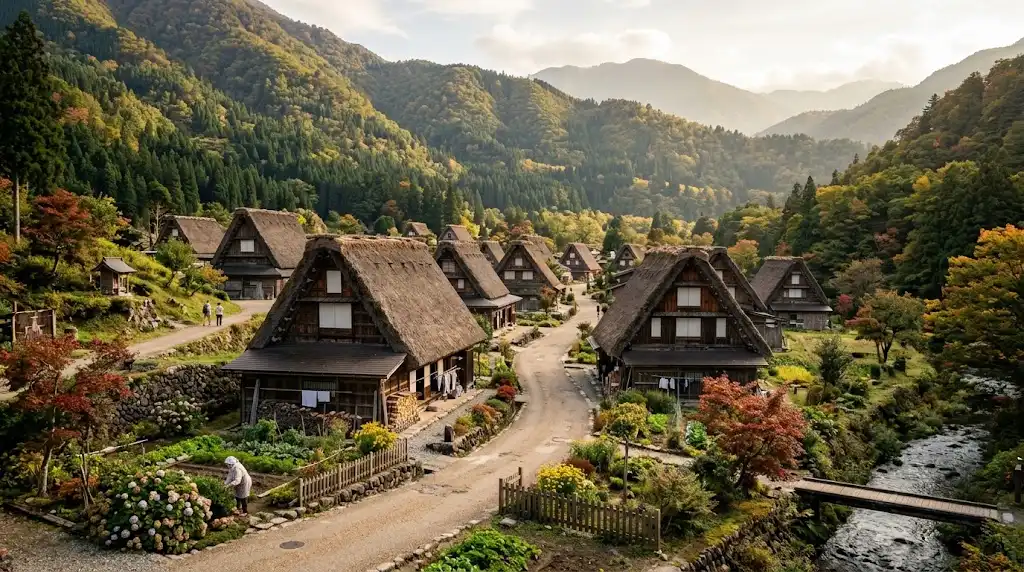
The Ogimachi settlement is famous for its gassho-zukuri houses, whose steep roofs resemble hands pressed together in prayer. The architectural style developed to cope with the area’s heavy snowfall, and some of the structures date back centuries.
Shirakawa-go and the neighboring villages of Gokayama were added to the UNESCO World Heritage List in 1995. Their preserved traditional architecture and mountain setting have made them one of Japan’s most recognizable rural landscapes.
Visitors can explore historic houses, museums, viewpoints, traditional accommodations, and surrounding natural areas. The official Japan tourism authority recommends staying overnight for travelers who want more time to experience the atmosphere rather than treating the village solely as a short stop.
When to Visit Shirakawa-go
Each season produces a different experience. Spring brings fresh greenery and flowers, summer provides lush mountain scenery, autumn adds colorful foliage, and winter can transform the steep-roofed houses into a snow-covered landscape.
Winter is particularly photogenic, but heavy snowfall also means travelers should prepare carefully for cold weather and changing road conditions.
Ainokura: A Smaller Gokayama Experience
For travelers looking for a quieter traditional settlement, Ainokura in Toyama Prefecture provides another perspective on Japan’s mountain heritage.
Ainokura has more than 20 well-preserved gassho-zukuri buildings and is part of the Historic Villages of Shirakawa-go and Gokayama World Heritage property. Its isolated location helped preserve a distinctive rural atmosphere.
Several buildings remain private residences, while some traditional houses operate as guesthouses. Visitors can also explore local crafts, museums, and seasonal events.
Because Ainokura is smaller than Shirakawa-go, it can be especially appealing to travelers who want to spend time observing the architecture and landscape at a slower pace.
Miyama: Traditional Japan Near Kyoto
Miyama offers an interesting option for travelers who want rural scenery without traveling as far from Kyoto.
Located around 50 kilometers north of central Kyoto, Miyama is known for its traditional kayabuki thatched-roof farmhouses. Kayabuki no Sato, its best-known settlement, contains 39 thatched houses and remains connected to a living rural community.
Unlike a museum village constructed entirely for visitors, much of Miyama remains a real residential area. The distinction matters because the experience is not only about viewing old buildings; it is also about seeing how traditional architecture and rural life continue to exist together.
Things to Do in Miyama
- Walk around Kayabuki no Sato.
- Stay in a traditional guesthouse.
- Cycle through the surrounding countryside.
- Explore local museums and craft traditions.
- Take guided walks with local knowledge.
- Explore nearby natural areas and waterfalls.
- Consider seasonal festivals and winter events.
Iya Valley: A Remote Mountain Escape
Iya Valley in Tokushima Prefecture offers a very different kind of hidden-village experience.
Deep in the mountains of Shikoku, the valley is characterized by steep terrain, river gorges, traditional farmhouses, hot springs, and historic vine bridges. Japan’s official tourism organization describes Iya as one of the country’s more secluded mountain regions.
The valley’s remoteness helped preserve traditional landscapes and communities. The Ochiai hamlet, for example, contains old houses and agricultural terraces spread across a steep mountainside.
Iya Valley is also suitable for travelers who want outdoor activities alongside cultural exploration. Depending on the season and conditions, visitors can explore hiking routes, scenic viewpoints, hot springs, rafting areas, and nearby Oboke and Koboke gorges.
Why Rural Japan Feels Different From Tokyo
The contrast between Japan’s largest cities and rural villages is one of the strongest reasons to include both in the same trip.
Tokyo is built around density, efficiency, technology, entertainment, and constant movement. Rural communities often emphasize landscape, local traditions, agriculture, crafts, and a slower rhythm.
Neither experience needs to replace the other.
A traveler can spend several days exploring Tokyo and Kyoto before heading into the mountains for a completely different experience. This combination can create a more balanced understanding of Japan’s contemporary and historical identities.
Travelers interested in exploring Japan beyond the capital can also read places to visit in Japan besides Tokyo for ideas that extend beyond the country’s most famous urban destination.
Japan’s Rural Architecture Is Part of the Attraction
One of the most compelling features of these villages is their architecture.
Traditional houses were not simply designed to look attractive. Their forms developed in response to weather, available materials, agricultural practices, and local ways of life.
The steep roofs of gassho-zukuri houses are particularly well suited to areas that receive substantial snowfall. In Shirakawa-go and Gokayama, these structures demonstrate how architecture can function as both cultural heritage and practical technology.
In some areas, traditional homes are still privately occupied. Others have become museums, restaurants, cultural facilities, or guesthouses. This mixture of preservation and continued use gives rural Japan much of its character.
Experiencing a Japanese Village Overnight
A day trip can provide a useful introduction, but staying overnight can create a deeper experience.
Traditional guesthouses, including minshuku, allow travelers to spend more time in the area after many day visitors have left. Some accommodations operate within historic buildings and serve regional food prepared with local ingredients.
Overnight stays can also make it easier to experience early morning scenery, evening village views, seasonal weather, and quieter walking routes.
Because accommodation in small villages is limited, advance planning is important, particularly during popular seasons and festival periods.
Hidden Villages and Japan’s Four Seasons
Rural Japan is highly seasonal, and the best time to visit depends on the experience a traveler wants.
Spring
Spring brings new greenery, flowers, and milder conditions to many mountain regions. Travelers who want to combine rural villages with seasonal scenery can also explore places to visit in Kyoto during spring.
Summer
Summer produces green mountains, flowing rivers, and opportunities for hiking, cycling, and other outdoor activities. Higher-elevation destinations can provide relief from the heat found in major cities.
Autumn
Autumn is one of the most visually striking seasons for mountain villages. Forested slopes can develop vivid colors, creating a dramatic contrast with traditional wooden houses.
Travelers who enjoy autumn scenery can also compare these landscapes with fall-color destinations in Wisconsin or fall destinations across the United States.
Winter
Snow gives villages such as Shirakawa-go an especially distinctive appearance. However, winter travel requires additional preparation, including appropriate footwear, warm clothing, and attention to transportation conditions.
Japan’s snowy rural landscapes are particularly different from destinations such as Japan’s major urban centers and other regional destinations, which is one reason winter village trips appeal to photographers and travelers interested in traditional scenery.
How to Reach Japan’s Hidden Villages
Getting to rural destinations requires more planning than visiting Tokyo, Kyoto, or Osaka.
Shirakawa-go is commonly reached by bus from Takayama, while travelers can also reach the village from other regional transportation hubs. The Japan National Tourism Organization notes that buses from Takayama reach Shirakawa-go in roughly 50 minutes.
Kanazawa is another useful gateway. Official tourism information describes Shirakawa-go as accessible by highway bus from Kanazawa in roughly 80 minutes, making it possible to visit as a day trip.
Miyama can be reached by train and bus via Hiyoshi Station, while Iya Valley requires more extensive travel into the mountains of Shikoku.
Transportation schedules can be less frequent than in Japan’s major cities, so travelers should check current schedules before departure.
Responsible Travel in Rural Japan
Popular hidden destinations can face a difficult balance. Tourism provides income and encourages cultural preservation, but large visitor numbers can also place pressure on residents, transportation systems, natural areas, and historic structures.
Visitors should remember that many traditional villages are living communities rather than open-air theme parks.
Responsible travel includes staying on designated paths, respecting private homes, following photography rules, keeping noise down, disposing of waste appropriately, and following local guidance.
Booking accommodation and transportation in advance can also make a trip easier for both visitors and local communities.
Combining Hidden Villages With a Wider Japan Itinerary
Japan’s rural destinations work especially well when incorporated into a broader itinerary.
A traveler might begin in Tokyo, continue to Kyoto, explore nearby rural areas such as Miyama, and then travel farther into the mountains or toward regional destinations. Another route could combine Kanazawa, Shirakawa-go, and Gokayama.
Travelers interested in different Japanese regions can also explore mountain travel in Spiti Valley, Phuket travel experiences, or northern Laos for comparisons with other destinations where mountains and local communities are central to the travel experience.
For travelers considering destinations outside Japan, related planning ideas include Taipei, Taiwan, Seoul, South Korea, and Luzon near Manila.
Are Japan’s Hidden Villages Still Hidden?
The phrase “hidden village” can be misleading. Some destinations, especially Shirakawa-go, are internationally recognized attractions and receive substantial visitor interest.
The more useful distinction is between Japan’s major metropolitan tourist centers and its rural cultural landscapes.
Even well-known villages can offer quieter experiences when travelers visit outside peak periods, stay overnight, explore less crowded areas responsibly, and spend time learning about local history rather than simply photographing the most recognizable viewpoint.
Frequently Asked Questions
What are some of Japan’s hidden villages?
Notable rural destinations include Shirakawa-go, Ainokura, Miyama, and settlements in Iya Valley. Their characteristics vary from traditional thatched houses to remote mountain landscapes and historic communities.
Is Shirakawa-go worth visiting?
Shirakawa-go offers internationally recognized traditional architecture, mountain scenery, historic houses, museums, and traditional accommodation. It is now a well-established tourist destination rather than an undiscovered village.
What is the best time to visit Japan’s mountain villages?
The best season depends on the desired experience. Spring and summer offer greenery and outdoor activities, autumn provides colorful foliage, and winter creates snow-covered landscapes in areas such as Shirakawa-go.
Can you stay overnight in Japanese villages?
Yes. Some villages offer traditional guesthouses and minshuku, and certain historic houses have been adapted for overnight stays. Availability can be limited, so advance reservations are advisable.
Can I visit Shirakawa-go without a car?
Yes. Shirakawa-go can be reached by bus from regional transportation hubs including Takayama and Kanazawa. Current schedules and reservation requirements should be checked before travel.
Final Thoughts
Japan’s hidden villages offer something that major cities cannot easily reproduce: a close connection between landscape, architecture, history, and everyday rural life.
Shirakawa-go provides iconic gassho-zukuri architecture, Ainokura offers a quieter Gokayama experience, Miyama combines traditional farmhouses with access from the Kyoto region, and Iya Valley delivers a more remote mountain adventure.
These destinations are not necessarily “hidden” in the literal sense anymore. Some are globally recognized. Their appeal lies instead in the opportunity to slow down, explore regional Japan, and experience places where cultural traditions remain closely connected to the surrounding landscape.
For travelers planning a future Japan trip, adding one or more rural destinations can create a more varied itinerary and reveal a side of the country that is easy to miss when traveling only between its largest cities.