
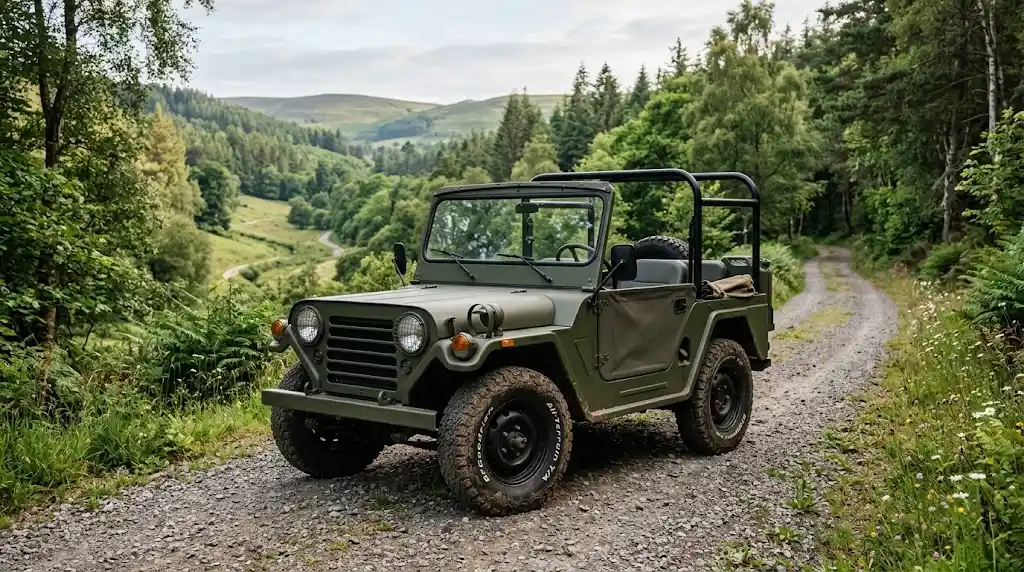
What Is a Mini Jeep?
A mini Jeep is a compact recreational vehicle styled after traditional utility or military-inspired 4×4 vehicles. Depending on the model, it may use a small gasoline engine or an electric powertrain. Some versions are designed primarily for private property and off-road recreation, while others may be manufactured to meet a recognized road-vehicle classification.
Mini Jeeps vary significantly in dimensions, performance, equipment, build quality, and intended use. Do not assume that two vehicles with similar appearances have the same legal status. Before comparing models, review the manufacturer’s specifications and documentation.
Are Mini Jeeps Street Legal?
Some compact vehicles can be registered for public-road use, but many mini Jeeps sold as recreational or off-road vehicles are not street legal as delivered. The answer depends on the vehicle’s certification, classification, required equipment, title or ownership documents, and local regulations.
Adding headlights, mirrors, turn signals, or a license-plate bracket does not automatically make an off-road-only vehicle road legal. The vehicle may still fail applicable safety, manufacturing, registration, or inspection requirements.
Before paying a deposit, contact the relevant vehicle-registration authority and ask whether the exact make, model, year, and vehicle identification number (VIN), where applicable, qualify for road registration. Get confirmation before relying on a seller’s verbal assurance.
Essential Features to Check Before Buying
1. Vehicle Identification and Documentation
Check whether the mini Jeep has a valid VIN or other identification required for its classification. Review the manufacturer’s compliance documents, title or ownership paperwork, import documents where applicable, and any previous registration records. Missing or inconsistent documentation can make registration difficult or impossible.
2. Lighting and Visibility
Depending on the applicable vehicle class, road-use equipment may include headlights, tail lamps, brake lights, turn signals, reflectors, mirrors, and a horn. Confirm that the equipment meets local specifications rather than judging it by appearance alone.
3. Brakes, Tires, and Steering
Inspect the braking system, steering components, tire condition, and suspension. Tires intended only for off-road use may not meet public-road requirements. A qualified mechanic can help assess the vehicle’s condition, but mechanical improvements cannot replace any mandatory vehicle certification.
4. Seat Belts and Occupant Protection
Check the seating capacity, seat belts, windshield requirements, and other occupant-protection features applicable to the vehicle’s classification. Do not carry more passengers than the vehicle is designed and approved to accommodate.
5. Speed and Road Compatibility
Many mini Jeeps are low-powered recreational vehicles and are not suitable for high-speed traffic. Even a vehicle that can be registered may face restrictions on where it can operate. Check speed limits, road-access rules, and any special restrictions that apply to low-speed vehicles or similar categories.
Street Legal Mini Jeep vs. Off-Road-Only Mini Jeep
| Feature | Road-Eligible Model | Off-Road-Only Model |
|---|---|---|
| Vehicle classification | Recognized classification with required compliance documentation | Often classified for recreational or off-road use |
| Registration | Must qualify under local registration rules | May not qualify for public-road registration |
| Safety equipment | Must meet requirements for its approved class | May lack equipment required for public roads |
| Typical use | Only the roads and conditions permitted by local law | Private property or authorized off-road areas |
| Insurance | Required coverage depends on local law and use | Specialized recreational coverage may be available |
This comparison is a general guide, not a legal determination for a particular vehicle. Always verify the exact model and jurisdiction before driving.
How Much Does a Mini Jeep Cost?
The purchase price is only one part of the total cost. The final amount depends on the model, powertrain, build quality, shipping, taxes, documentation, maintenance needs, and whether the vehicle can legally be registered for the intended use.
Build a complete budget that considers:
- Purchase price and delivery charges
- Taxes, title, registration, and inspection fees where applicable
- Insurance or recreational-vehicle coverage
- Fuel or electricity costs
- Routine maintenance, tires, brakes, and replacement parts
- Secure storage, transport to trails, and protective equipment
If a seller advertises a low price but cannot provide clear compliance documentation, do not assume that you can solve the problem after purchase. Research the full ownership costs before making a commitment. For a broader look at vehicle ownership options, read our guide to car subscription services.
Gas-Powered vs. Electric Mini Jeeps
Gas-powered mini Jeeps may appeal to buyers who prefer refueling and want to use a vehicle in locations without convenient charging. However, engine maintenance, fuel storage, noise, and emissions should be considered.
Electric mini Jeeps can offer quieter operation and fewer routine powertrain service items, but buyers should compare battery capacity, real-world range, charging time, replacement costs, and access to suitable charging equipment. Range can change with terrain, temperature, passenger load, and driving style.
Neither powertrain automatically makes a mini Jeep road legal. Certification and registration eligibility must be checked separately. For more context on changing vehicle technology, explore how electric vehicles are shaping urban commutes.
Safety Tips for Mini Jeep Owners
- Use the correct environment: Operate off-road-only vehicles only on private property with permission or in areas where their use is expressly permitted.
- Wear suitable protection: Use seat belts and other protective equipment supplied or required for the vehicle. Follow the manufacturer’s safety instructions.
- Inspect the vehicle: Check tires, brakes, steering, lights, and visible damage before each ride.
- Respect passenger limits: Never exceed the approved seating capacity or load limit.
- Adjust driving to conditions: Wet surfaces, loose gravel, steep slopes, and uneven ground can increase the risk of losing control.
- Keep children supervised: Follow age, size, and supervision requirements. A small vehicle is not automatically a safe toy.
- Secure the vehicle during transport: Use appropriate trailers, tie-down points, and loading procedures when transporting a mini Jeep to an authorized riding area.
Regular inspections and professional maintenance are important for any vehicle. Our guides to vehicle care and servicing, reliable vehicle maintenance, and professional car care provide additional reading on keeping vehicles in good condition.
Maintenance Essentials
Maintenance requirements depend on the model and powertrain. Follow the manufacturer’s schedule instead of relying on a generic service interval.
- Inspect tires for damage, wear, and correct pressure.
- Check brake operation and have worn components serviced promptly.
- Inspect steering, suspension, fasteners, and chassis components.
- Keep lights, reflectors, mirrors, and other required equipment functional.
- For gasoline models, follow the specified engine-oil, fuel-system, and air-filter service schedule.
- For electric models, follow battery-care and charging instructions.
- Clean mud and debris after off-road use, paying attention to moving parts and areas where corrosion can develop.
If the vehicle develops unusual noises, braking problems, steering looseness, electrical faults, or battery issues, stop using it until the problem has been assessed. Additional automotive reading is available in our articles about vehicle performance and maintenance and routine car care.
Choosing Tires and Upgrades
Choose tires based on the vehicle manufacturer’s specifications and the terrain where the mini Jeep will be used. Aggressive off-road tread may help in certain loose surfaces but can affect road noise, handling, and pavement performance. Never assume that an off-road tire is approved for public-road use.
Before installing larger tires, lift kits, lighting upgrades, or other modifications, confirm compatibility with the suspension, brakes, steering, and vehicle classification. Changes may affect safety, warranty coverage, inspection results, or legal compliance.
For more background on tire selection and vehicle performance, read our guide to tire technology and safety. Keep upgrades practical, correctly installed, and appropriate for your intended use.
Where Can You Use a Mini Jeep for Adventure?
If your model is intended for off-road recreation, look for authorized trails, designated recreation areas, or private land where vehicle use is permitted. Check access rules, seasonal closures, noise restrictions, environmental requirements, and whether the area allows the specific type of vehicle you own.
Outdoor trips also require preparation. Plan your route, check weather and terrain, bring water and essential supplies, and make sure your vehicle can be transported safely to the riding area. For inspiration when planning an outdoor getaway, see our guide to Peter Igo Park, places to visit in Ozark National Forest, and outdoor attractions around Lake of the Ozarks. These destinations are travel inspiration, not confirmation that mini Jeeps are permitted on their trails or roads.
For longer road trips, consider practical stops and vehicle logistics in advance. Our guide to Highspire Travel Plaza offers a starting point for thinking about roadside facilities, while travel planning and adventure experiences can help inspire a broader itinerary.
Insurance, Registration, and Legal Responsibilities
Before using a mini Jeep, establish which rules apply to its classification and intended location. Depending on local law, requirements may include registration, a valid title, liability insurance, a driver’s license, inspections, approved safety equipment, and restrictions on roads or operating hours.
Do not rely on online listings that describe a vehicle as “street legal” without supporting documentation. Ask the seller to identify the exact classification and provide relevant compliance records. Then confirm those details with the appropriate authority and insurer before buying or driving it.
Outdoor recreation can also involve separate access and land-use rules. If your plans include hunting areas or remote public land, check the relevant regulations rather than assuming vehicle access is allowed. You can read more about outdoor regulations in our overview of hunting legality and local rules and Michigan’s legal shooting hours. These articles are not substitutes for current official rules governing your specific destination.
Common Mistakes to Avoid
- Buying a mini Jeep before checking whether its exact model can be registered.
- Assuming that lights, mirrors, and a license plate automatically make it road legal.
- Ignoring insurance requirements or exclusions.
- Using off-road-only tires or equipment on public roads without confirming compliance.
- Overloading the vehicle or carrying passengers beyond its approved capacity.
- Driving on private land without permission or entering trails where the vehicle is prohibited.
- Skipping maintenance because the vehicle is small or used only occasionally.
Frequently Asked Questions
Can I drive a mini Jeep on public roads?
Only if the specific vehicle meets the applicable requirements and is legally authorized for public-road use in your jurisdiction. Many recreational mini Jeeps are off-road-only.
Can I make an off-road mini Jeep street legal?
Not necessarily. Modifications alone may not overcome certification, manufacturing, title, or registration barriers. Check with the relevant registration authority before investing in modifications.
Does every street legal mini Jeep need insurance?
Insurance requirements depend on local law and vehicle classification. Confirm mandatory coverage with your registration authority and insurer before operating the vehicle.
Are mini Jeeps suitable for highways?
Many are not designed for highway speeds or highway traffic. Follow the manufacturer’s limits and the laws governing the vehicle’s class. Never enter a highway unless the vehicle is specifically authorized and suitable for that use.
What should I check before buying a mini Jeep?
Review the vehicle identification, compliance documentation, registration eligibility, safety equipment, maintenance history, parts availability, insurance options, and total ownership costs.
Are electric mini Jeeps automatically street legal?
No. An electric powertrain does not automatically establish road legality. The vehicle must still satisfy the requirements that apply to its classification.
Final Thoughts
A mini Jeep can be an enjoyable recreational vehicle when it matches your needs, budget, and intended terrain. The most important step is to verify its legal status before purchasing it. Compare the documentation, safety features, maintenance needs, insurance options, and total ownership costs—not just its appearance or advertised price.
Choose a vehicle designed for your intended use, follow local rules, and ride only where you are authorized to do so. With realistic expectations and careful preparation, you can make a better-informed decision about whether a mini Jeep is right for your next adventure.
Explore more automotive, travel, and lifestyle guides on the OmniFlowHub blog or visit the OmniFlowHub homepage for more articles.