
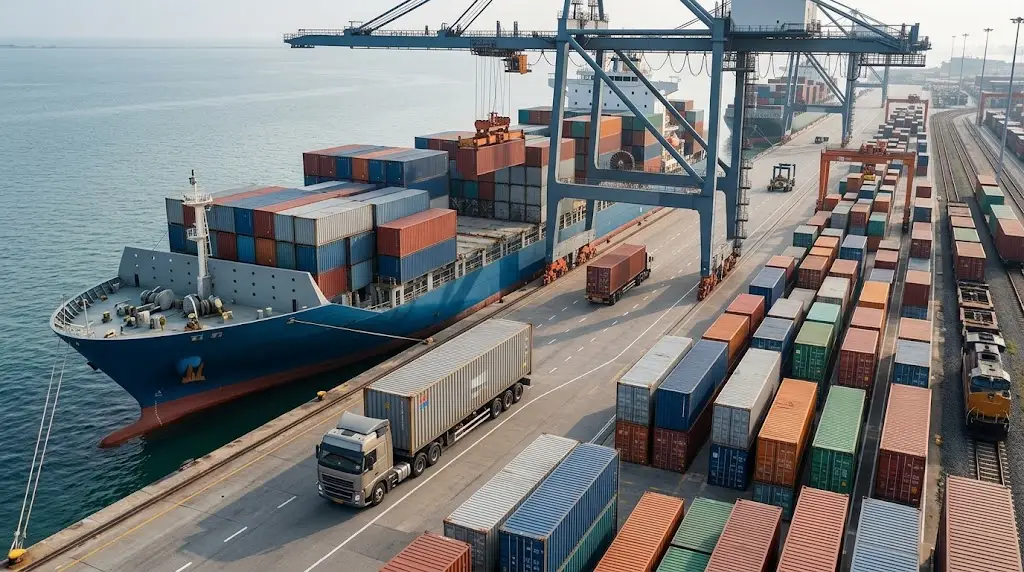
This article explains the core elements of efficient logistics, the importance of shipment visibility, the role of transportation and warehousing, and the practical steps companies can take to improve supply chain performance. It also outlines how to assess a logistics provider before committing to a long-term commercial relationship.
Understanding the Role of Logistics in Global Trade
Logistics connects suppliers, manufacturers, warehouses, distributors, retailers, and final customers. It involves planning how goods move, where they are stored, which documents accompany them, and how delivery progress is communicated.
International supply chains are particularly complex because shipments may pass through several carriers, ports, border crossings, customs authorities, and distribution facilities. Each handover introduces additional coordination requirements. Without clear responsibilities and accurate information, businesses can experience missed delivery windows, unexpected charges, inventory shortages, and avoidable administrative work.
Effective logistics management creates a coordinated process from origin to destination. Businesses planning international movements can also explore global supply chain coordination and logistics approaches for improving supply chain efficiency to understand related operational priorities.
How Efficient Logistics Supports Business Performance
Improving Delivery Reliability
Delivery reliability depends on realistic scheduling, suitable transport capacity, accurate documentation, and effective coordination between every party handling a shipment. A delivery plan should account for collection times, transit estimates, border procedures, loading and unloading, and the receiving facility’s operating hours.
Businesses should distinguish between a fast quoted transit time and a consistently achievable delivery schedule. A route that appears quicker on paper may be less dependable if it involves multiple transfers, limited transport capacity, or unpredictable clearance procedures.
Controlling Transportation and Handling Costs
Transport expenses include more than the price of moving cargo. Fuel, terminal handling, storage, customs-related charges, documentation, insurance, packaging, and delays can all affect the final landed cost of a shipment.
Comparing providers on total cost gives procurement teams a more complete view than comparing freight quotations alone. Businesses should request a clear breakdown of included services, additional charges, responsibilities, and circumstances that may create extra costs.
For organizations considering external transport oversight, the guide to external transport manager costs offers a related perspective on planning and managing transportation expenditure.
Protecting Cargo During Transit
Cargo protection starts with understanding the goods being shipped. Fragile products, high-value equipment, food items, industrial materials, and temperature-sensitive cargo may require different packaging, handling, storage, and monitoring procedures.
Businesses should establish loading instructions, packaging standards, cargo-securing requirements, and inspection procedures before dispatch. Where appropriate, shipment records should include photographs, package counts, condition reports, and evidence of delivery.
Temperature-sensitive goods need additional controls throughout the journey. The related overview of cold chain logistics and supply chain management explains why handling conditions and shipment monitoring matter for sensitive products.
Key Logistics Services Businesses Should Understand
1. Freight Transportation
Freight transportation moves goods between suppliers, production facilities, ports, warehouses, and customers. Road, rail, sea, and air services offer different combinations of speed, capacity, flexibility, and cost.
Road freight can support regional distribution and door-to-door movements. Rail may be appropriate for certain long-distance cargo flows. Sea freight is commonly considered for large international shipments, while air freight can be useful when speed is especially important or cargo volumes justify the cost.
The appropriate mode depends on the origin, destination, shipment dimensions, weight, cargo value, delivery deadline, and available infrastructure. Businesses should compare complete route options rather than selecting a transport mode in isolation.
2. Freight Forwarding and Shipment Coordination
Freight forwarding involves arranging the movement of cargo through suitable transport services and coordinating relevant shipment information. Depending on the agreed scope, this can include booking, documentation, carrier communication, customs coordination, cargo consolidation, and delivery arrangements.
Clear responsibility is essential when several providers participate in a shipment. A business should know who manages each transport leg, who provides status updates, who handles documentation questions, and who is responsible for escalating delays.
3. Warehousing and Inventory Management
Warehousing provides a location for receiving, storing, preparing, consolidating, and dispatching goods. Efficient warehouse operations help businesses maintain accurate stock records and align inventory availability with customer demand.
Important warehouse processes include receiving inspections, inventory identification, stock reconciliation, order picking, packing, dispatch preparation, and returns handling. Appropriate warehouse management systems can help coordinate these activities and reduce errors caused by inconsistent manual records.
Businesses should evaluate warehouse locations, storage conditions, security arrangements, handling equipment, inventory reporting, and access to onward transportation. The best arrangement depends on product characteristics and the distribution network it must support.
4. Customs and Shipping Documentation
Cross-border shipments require accurate information about the goods, parties involved, declared values, origin, destination, and applicable product classifications. Depending on the shipment and jurisdictions involved, supporting records may include commercial invoices, packing lists, transport documents, permits, certificates, or other regulatory paperwork.
Documentation requirements vary by country, product, and trade arrangement. Businesses should confirm the applicable requirements before dispatch and ensure that shipment details remain consistent across relevant records.
Errors or missing documents can lead to inspections, clearance delays, storage costs, penalties, or rejected shipments. Assigning clear ownership of documentation and reviewing records before departure can reduce avoidable disruption.
5. Distribution and Final Delivery
Distribution connects warehouses and transport networks with business customers, retail locations, and other receiving destinations. Final delivery requires accurate addresses, suitable vehicles, agreed time windows, and clear instructions for unloading and handover.
For multi-location distribution, route planning should balance vehicle capacity, delivery priorities, travel time, and the requirements of each destination. Proof of delivery and exception reporting help businesses resolve disputes and understand whether service commitments have been met.
The Importance of Shipment Visibility
Supply chain visibility helps businesses understand where goods are, which milestones have been completed, and whether a shipment remains on schedule. Without reliable updates, teams may discover a delay only after it affects production, inventory availability, or a customer’s delivery window.
Tracking Shipment Milestones
Useful shipment milestones can include collection, warehouse receipt, departure, arrival at a terminal, customs release, transfer to another carrier, out-for-delivery status, and final receipt. The milestones required depend on the route and the shipment’s operational importance.
Businesses should establish how frequently updates are expected and how missing or conflicting information will be investigated. A tracking system is most valuable when the information supports decisions rather than merely displaying shipment status.
Managing Delays and Exceptions
Delays can result from weather, congestion, equipment issues, incomplete documents, capacity shortages, or changes in delivery requirements. Effective exception management identifies the problem, establishes its likely impact, assigns responsibility, and communicates a realistic recovery plan.
For important shipments, businesses may define escalation thresholds based on the delivery deadline, cargo value, inventory risk, or customer commitment. Early communication can provide more time to arrange an alternative route, adjust production plans, or notify the receiving customer.
How Technology Can Strengthen Logistics Operations
Digital Documentation
Digital records can make shipping documents easier to organize, retrieve, review, and share with authorized parties. Consistent document management can reduce repeated data entry and help teams identify discrepancies before they create operational delays.
Businesses should also maintain appropriate access controls, backup procedures, document versioning, and retention practices. Digitization improves efficiency only when information remains accurate, secure, and accessible to the people who need it.
Warehouse and Transport System Integration
Warehouse management systems and transport management systems can connect stock availability, dispatch schedules, carrier assignments, shipment milestones, and delivery records. When these systems share reliable data, teams can coordinate activities with fewer manual handovers.
Technology planning should begin with a clear operational need. Organizations exploring wider digital transformation can also review the role of artificial intelligence in business technology and technology-enabled service management for related context.
Analytics and Demand Forecasting
Historical shipment information can reveal recurring delays, underused transport capacity, seasonal demand changes, high-cost routes, and inventory bottlenecks. Businesses can use these findings to refine purchasing schedules, plan warehouse capacity, and negotiate service arrangements.
Forecasts should be reviewed against actual outcomes. Incomplete records, sudden demand changes, changing market conditions, and unrealistic assumptions can make projections unreliable. Regular review helps teams identify where planning methods need adjustment.
Practical Strategies for Faster and More Precise Logistics
Plan Routes Around Real Operating Conditions
Route planning should consider distance, border requirements, transit connections, congestion, vehicle availability, delivery windows, and the type of cargo. Businesses should also identify alternative routes or transport arrangements for shipments where delays would have a substantial commercial impact.
Improve Coordination Between Supply Chain Partners
Suppliers, carriers, warehouses, customs representatives, and receiving teams need consistent shipment information. Standardized booking instructions, agreed cut-off times, named contacts, and clear escalation procedures reduce uncertainty when a shipment changes status.
Companies should define which party owns each task and how exceptions are reported. A shared process is often more effective than relying on informal messages or expecting each participant to independently coordinate the entire shipment.
Use Shipment Consolidation Where Appropriate
Combining compatible shipments can improve vehicle or container utilization and reduce the cost per unit transported. However, consolidation may add handling steps or waiting time, so it should be assessed against delivery deadlines, cargo compatibility, and the risk of damage.
Review Packaging and Cargo Preparation
Correct packaging, labeling, palletization, and cargo securing can help reduce damage and speed up handling. Shipment preparation should account for the transport mode, expected handling conditions, product fragility, and any applicable safety or regulatory requirements.
Build Contingency Plans
Supply chains can be disrupted by severe weather, port congestion, vehicle breakdowns, supplier interruptions, and changes in border procedures. Businesses should identify critical dependencies and determine what alternatives are available when normal operations are interrupted.
Contingency planning may include alternative carriers, backup inventory, revised delivery priorities, emergency contacts, and pre-agreed escalation procedures. Plans should be reviewed periodically rather than left unchanged after the initial assessment.
How to Measure Logistics Performance
Reliable performance measurement helps businesses determine whether logistics improvements are delivering meaningful results. The most useful indicators are defined consistently and linked to operational or customer requirements.
- On-time delivery rate: The proportion of shipments delivered within the agreed delivery window.
- Transit time: The elapsed time between defined shipment milestones.
- Cost per shipment: The logistics cost associated with a defined shipment or service category.
- Order accuracy: The proportion of orders dispatched with the correct products and quantities.
- Cargo damage rate: The proportion of shipments affected by documented damage.
- Documentation error rate: The frequency of shipment records requiring correction.
- Exception resolution time: The time required to investigate and resolve a shipment problem.
- Inventory accuracy: The agreement between recorded stock and physical inventory.
Businesses should establish a baseline before introducing changes, then compare results across consistent reporting periods. Performance comparisons should account for differences in route, cargo type, shipment size, and service level so that apparent improvements are not caused by changes in the mix of shipments.
Choosing a Logistics Partner: Questions to Ask
Businesses considering AJS Logistics or another provider should begin by defining their own operational requirements. The company name alone does not establish which services are available, which routes are supported, or what service levels can be guaranteed.
Before entering an agreement, request clear answers to the following questions:
- Which transport modes, routes, and delivery destinations can the provider support?
- What types of cargo can be handled, and are any restrictions applicable?
- Which services are managed directly and which depend on third-party partners?
- How are shipment tracking, delivery updates, and exceptions communicated?
- What documentation and customs coordination are included in the agreed scope?
- How are freight rates, handling charges, storage costs, and additional fees calculated?
- What insurance arrangements and liability terms apply to the shipment?
- How does the provider handle missed deadlines, damaged cargo, or incomplete documentation?
- Can the provider supply relevant performance reports and shipment records?
- What contingency arrangements are available for significant disruptions?
Businesses should verify service claims, insurance provisions, compliance obligations, and contractual responsibilities before making a decision. The right partner is one whose documented capabilities and operating procedures match the shipment requirements and commercial risks involved.
Logistics, Transportation, and Sustainability
Efficient transportation can support sustainability when it reduces unnecessary mileage, improves load utilization, prevents avoidable product loss, and limits repeated handling. Route planning and better coordination may help businesses use existing transport capacity more effectively.
Vehicle technology is another consideration, although the most appropriate solution depends on the route, cargo, payload, charging or fueling infrastructure, and operating requirements. For additional context, read about electric vehicles and changing urban transportation and developments in tyre technology and vehicle performance.
Sustainability initiatives should be assessed using measurable results rather than assumptions. Businesses can review fuel or energy consumption, empty mileage, shipment consolidation, packaging waste, and product damage while ensuring that changes do not compromise safety or delivery commitments.
Common Logistics Challenges and How to Address Them
Unpredictable Transit Times
Unpredictable transit times can result from congestion, border delays, missed connections, and limited carrier capacity. Businesses can improve planning by using realistic transit estimates, tracking milestone performance, and identifying alternative arrangements for critical shipments.
Limited Shipment Information
Inconsistent updates make it difficult to respond quickly to delays or changing delivery conditions. Clear reporting responsibilities, standardized shipment references, and agreed communication intervals help improve visibility.
Unexpected Costs
Unplanned storage, handling, documentation corrections, and waiting charges can increase the final cost of a shipment. Businesses should review quotation terms, confirm the assumptions behind estimated costs, and establish procedures for approving additional expenses.
Coordination Across Multiple Providers
When several providers handle a shipment, responsibilities can become unclear at handover points. A documented operating process should identify the party responsible for each transport leg, the required shipment records, and the procedure for reporting exceptions.
Frequently Asked Questions
What is AJS Logistics?
AJS Logistics is the subject of this article about global logistics and supply chain coordination. Because different businesses use similar names, readers should verify the specific company’s identity, operating locations, and service offering before relying on company-specific claims.
How does logistics improve global supply chains?
Logistics coordinates transportation, storage, documentation, inventory, and delivery. Better coordination can reduce avoidable delays, improve shipment visibility, support cost control, and help businesses meet customer commitments.
Why is shipment tracking important?
Shipment tracking helps businesses monitor progress, identify delays, communicate with customers, and investigate exceptions. Its value depends on the accuracy of the information and the ability of teams to act on it.
How can businesses reduce international shipping costs?
Businesses can compare transport modes, improve load utilization, review packaging, reduce unnecessary storage, prepare documentation accurately, and evaluate total landed cost rather than freight rates alone.
What should a business check before choosing a logistics provider?
It should verify route coverage, cargo capabilities, service responsibilities, tracking procedures, documentation support, pricing, insurance, liability terms, and contingency arrangements.
Does faster transportation always mean better logistics?
No. A faster service may cost more or involve additional handling. The best option balances transit time, reliability, cargo requirements, total cost, and the consequences of missing the delivery deadline.
Conclusion
Modern logistics requires coordination across transportation, warehousing, documentation, inventory management, and final delivery. Businesses that establish clear responsibilities, maintain reliable shipment information, measure performance consistently, and prepare for disruptions are better positioned to manage complex supply chains.
AJS Logistics provides a starting point for examining these operational priorities. However, businesses should confirm the specific provider’s capabilities and contractual commitments before treating any service or performance claim as established. By evaluating logistics partners against documented requirements and measurable outcomes, organizations can make better-informed decisions about speed, precision, cost, and supply chain resilience.