
You have just landed in a new city. You are tired, your phone battery is low, and the taxi queue outside the terminal looks like the easy answer. It is also the most expensive one. In most cities, a bus or a train will take you to the same city centre for a fraction of the price — you just need to know which one to take before you walk out of the arrivals hall.
Check the Options Before You Land
The cheapest airport transfer is the one you plan in advance. While you still have Wi-Fi at home or on the plane, open the airport’s official website and look for its “getting here” or “transport” page. It lists every bus, train and shuttle that serves the airport, with fares and journey times. That one page usually answers the whole question.
Next, open a maps app and ask for directions from the airport to your hotel using public transport. It shows you the route, the number of changes and roughly how long it takes. Download the map for offline use, because airport Wi-Fi and mobile data can both be unreliable when you need them most.
The Airport Bus: Usually the Cheapest Direct Ride
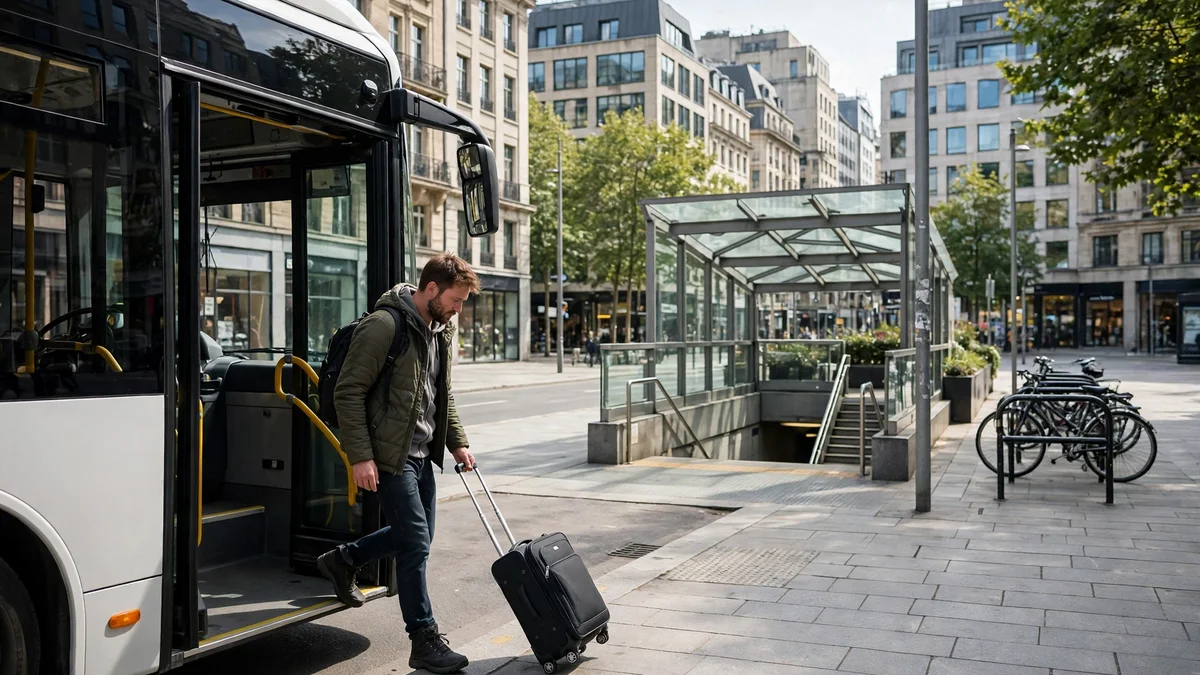
For most travellers, the airport bus is the best budget option. Many airports run a dedicated express bus that goes straight to the main station or the city centre, with no changes and space for luggage. It is slower than a train, but it is usually the cheapest ride that drops you close to where you are staying.
Buy your ticket from the machine, the kiosk or the driver — and check whether it is cheaper online before you travel, because some operators sell discounted tickets on their website. Keep the ticket until you reach your stop, and check the time of the last bus before you land. If your flight is delayed, the bus you planned on may already have gone, so always know the backup option.
Metro and Trains: Fast, Cheap and Traffic-Proof
Where an airport has a direct rail or metro link, it is often the best balance of price and speed. Trains and metros do not sit in traffic, they run on a fixed timetable, and a single ticket usually costs far less than a taxi for the same journey. Some airports have a station inside the terminal building, so you can be on a train within minutes of collecting your bags.
Buy your ticket at the station machine before you board, and check whether you need to validate it — in some cities an unvalidated ticket counts as no ticket at all, and the fine costs far more than the fare.
Shared Shuttles and Minibuses
A shared shuttle sits between the bus and the taxi. You book a seat in a minibus, it collects several passengers from the airport and drops each one at their hotel. It costs more than a public bus but much less than a private taxi, and it saves you the walk from the bus stop with heavy bags.
Shuttles work best when you book them in advance, because the driver needs to know how many people to expect. The trade-off is time: you may wait while other passengers arrive, and your hotel may be the last stop on the route.
When a Taxi or Rideshare Is Actually Worth the Money
A taxi is not always a bad choice — it is just a bad default. There are three situations where it makes sense. First, when you land late at night and the buses and trains have stopped running. Second, when you are travelling as a group of three or four and can split the fare, which can bring the cost per person close to a bus ticket. Third, when you have heavy luggage, small children or limited mobility, and the walk from the station is not practical.
If you do take a taxi, use the official taxi rank outside the terminal, not a driver who approaches you inside. Make sure the meter is running, or agree the price before you get in. With a rideshare app, the price is fixed before you book, which removes the guesswork. Unlicensed drivers and inflated fares are one of the most common ways travellers get overcharged at airports, so it helps to know how to avoid common tourist scams in a new city before you arrive.
Free Options Worth Checking
Before you pay for anything, check whether a free ride is already waiting for you. Many hotels run a free airport shuttle — ask when you book, and confirm the pick-up point and times, because some shuttles only run on request. If you are staying close to the airport, walking may even be an option, although airports are often further from the centre than they look on a map, and the roads around them are not always safe for pedestrians.
Money-Saving Tips Before You Land
A few small decisions before you travel can cut the cost of the airport journey:
- Arrive in daylight if you can. Night buses and trains are less frequent, and a late arrival often leaves you with only the taxi option. If your dates are flexible, picking a daytime arrival can save you a taxi fare — our guide on how to find cheap flights with flexible travel dates shows how to search for them.
- Travel light. One bag you can carry yourself makes buses, trains and walking all easier, and it removes the need for a door-to-door taxi. See how to plan a carry-on only trip for seven days if you want to try it.
- Carry a little local cash. Ticket machines and small buses do not always accept cards, and the airport exchange desk gives the worst rate in the city. Change a small amount before you travel, or withdraw from an ATM at the airport instead.
- Do not book the first transfer you see. The transfer desks inside arrivals sell the most expensive options. Walk past them, find the public transport signs, and buy a standard ticket like a local would.
Mistakes That Cost Travellers Money
The most expensive mistake is following someone who offers you a ride inside the terminal. Licensed taxis wait at the rank outside; anyone approaching you in arrivals is usually charging far more than the real price. The second mistake is not checking the last departure — a bus that stops at midnight is no help if your flight lands at half past. The third is assuming your card will work everywhere: some airport buses are cash-only. Finally, do not pay for a private transfer in advance without checking the public options first. A twenty-minute bus ride does not need a pre-booked car.
Frequently Asked Questions
How much should airport to city centre transport cost?
It varies a lot by city, but public transport is usually a small fraction of a taxi fare for the same journey. Check the fare on the airport’s official website before you travel, so you know what the ticket should cost and can spot an overcharge straight away.
Is it safe to take the bus or train at night?
In most cities, yes — airport buses and trains are used by travellers at all hours. The real risk is not safety but availability: services run less often late at night, and the last departure may be earlier than you expect. Check the timetable before you land, and if your flight arrives very late, pre-book a licensed transfer instead of relying on a taxi tout.
Should I book airport transport in advance?
For buses, trains and the metro, there is usually no need — buy the ticket when you arrive. For shared shuttles, booking ahead is often cheaper and guarantees a seat. For a private taxi or transfer, booking through an app or a known company in advance fixes the price and avoids the inflated fares charged at the arrivals desk.
Final Thoughts
Getting from the airport to the city centre on a budget comes down to one habit: check before you land. Look up the airport’s transport page, find the bus or train that fits your arrival time, and know what the ticket should cost. The taxi queue will always be there if you need it — but once you know the cheap route, you will rarely need it at all.